Quick answer: a pool is easiest to maintain when you don’t just split the season into “fill it” and “winterize it”. In spring you need a safe equipment start-up, in summer regular checks, and in autumn clean water, correct values, and protecting the system from frost.
This hub brings together guides, checklists and calculators that help a pool owner get through the season without unnecessary shortcuts.
Spring: opening up
- Remove coarse debris and check the water level.
- Inspect the filtration, pump, seals, valves and pipework.
- Test pH, total alkalinity, disinfectant level, and if relevant, hardness or CYA.
- Start the filtration, and base your first treatments on the readings.
- Open the spring start-up guide
Summer: operation and problem situations
- After heavy bathing use, extend the filtration and check the disinfectant level.
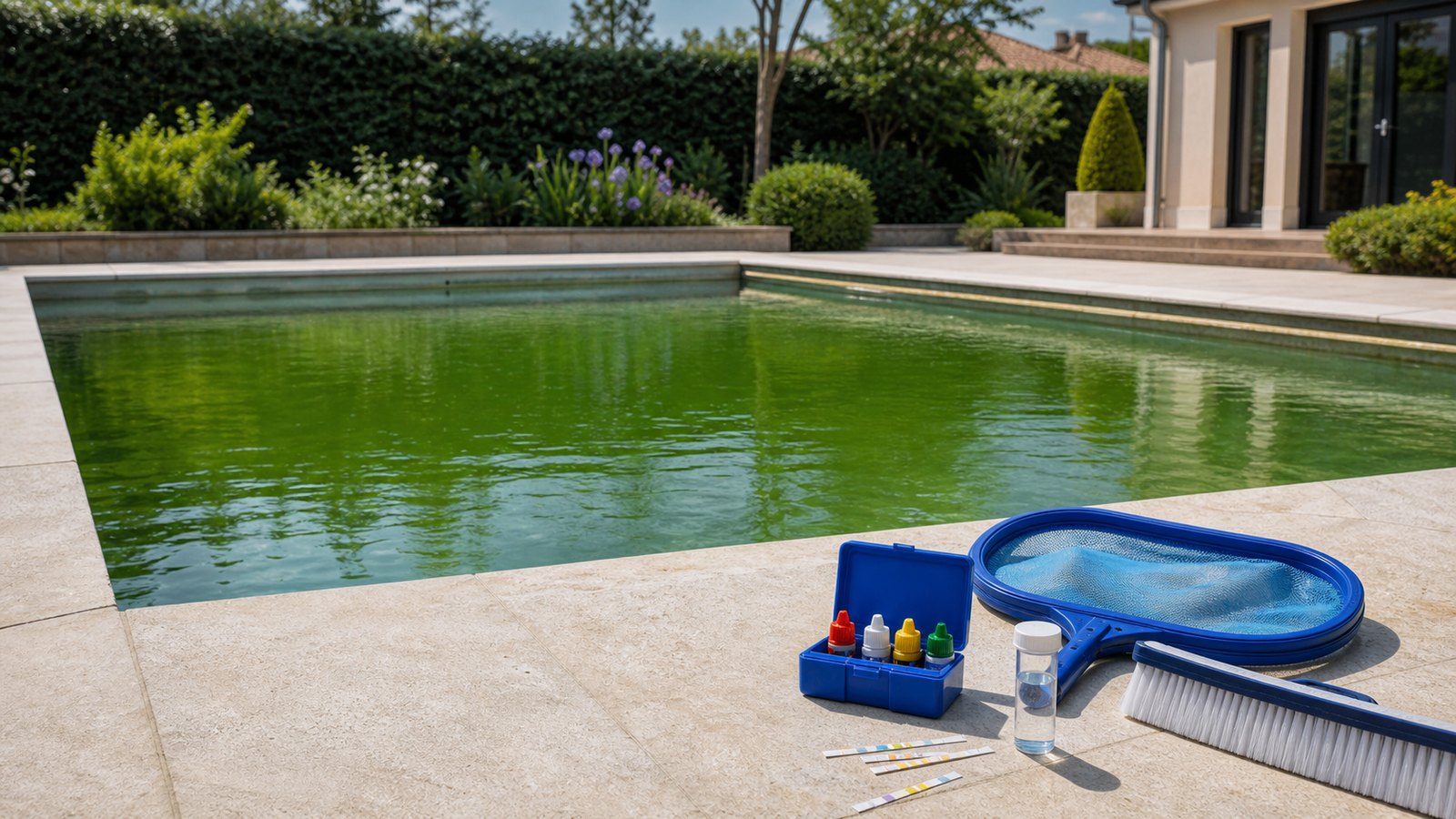
- After a storm, pollen, or heat, react before the water turns green.
- When the water changes, address the symptom, the values and the filtration together.
- For a hot tub, keep an eye on more frequent testing, the filter, and water changes.
- Open the water diagnostics tool
Autumn: winterizing
- Winterize clean water, not a problem that’s just hidden under a cover.
- Adjust the values according to your pool type and the manufacturer’s recommendations.
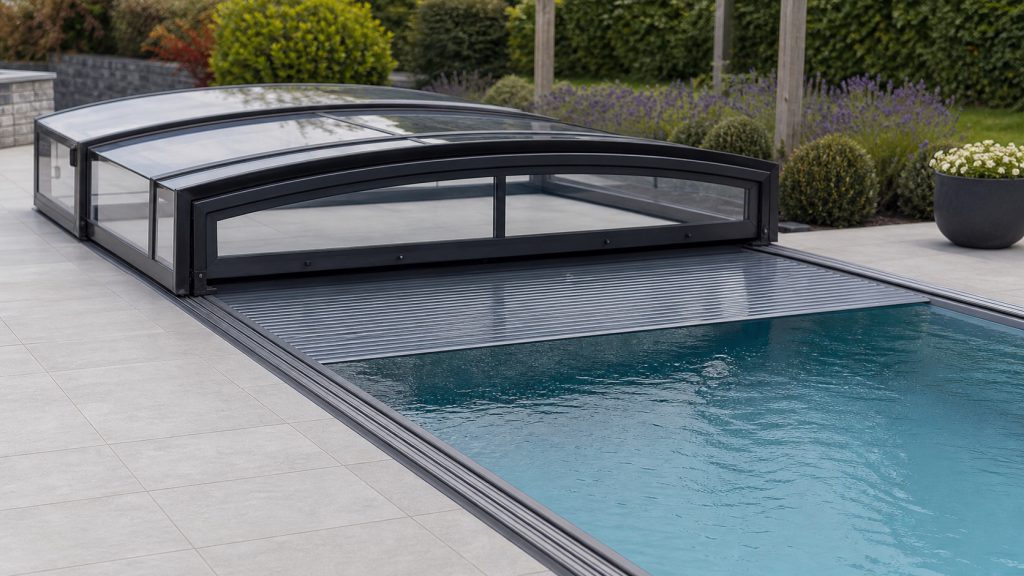
- Prepare the equipment, water level, jets, skimmer and cover for frost.
- For anything uncertain with the structure, liner or equipment, get a service company involved.
- Open the winterizing guide
Quick tools for the season
- Seasonal pool and hot tub maintenance calendar
- Water volume calculator
- Filtration calculator
- Chemical dosing calculator by product label
- Service brief for a water problem
When it’s better to call for service
- The equipment leaks after winter, air gets into the system, or the pump sounds unusual.
- The water is black when you uncover it, smells strongly, or has an unknown film on it.
- The water level drops faster than normal evaporation would explain.
- You’re not sure about draining, the water level, or the pressure on an in-ground pool.
- After repeated treatment, the values keep coming back outside the safe range.