Quick answer: the best water source for a pool isn’t always the cheapest hose. Mains water tends to be predictable, but slow and sometimes restricted. A tanker is fast, but check where the water comes from. A well can be cheap, yet iron, manganese, hardness and sediment can turn the water brown, black or milky once chlorine hits it.
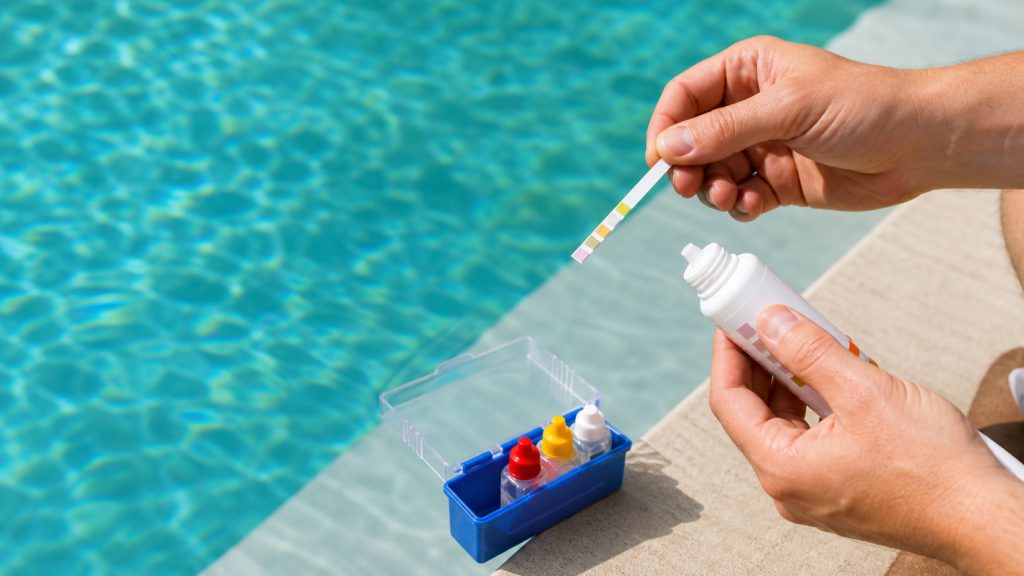
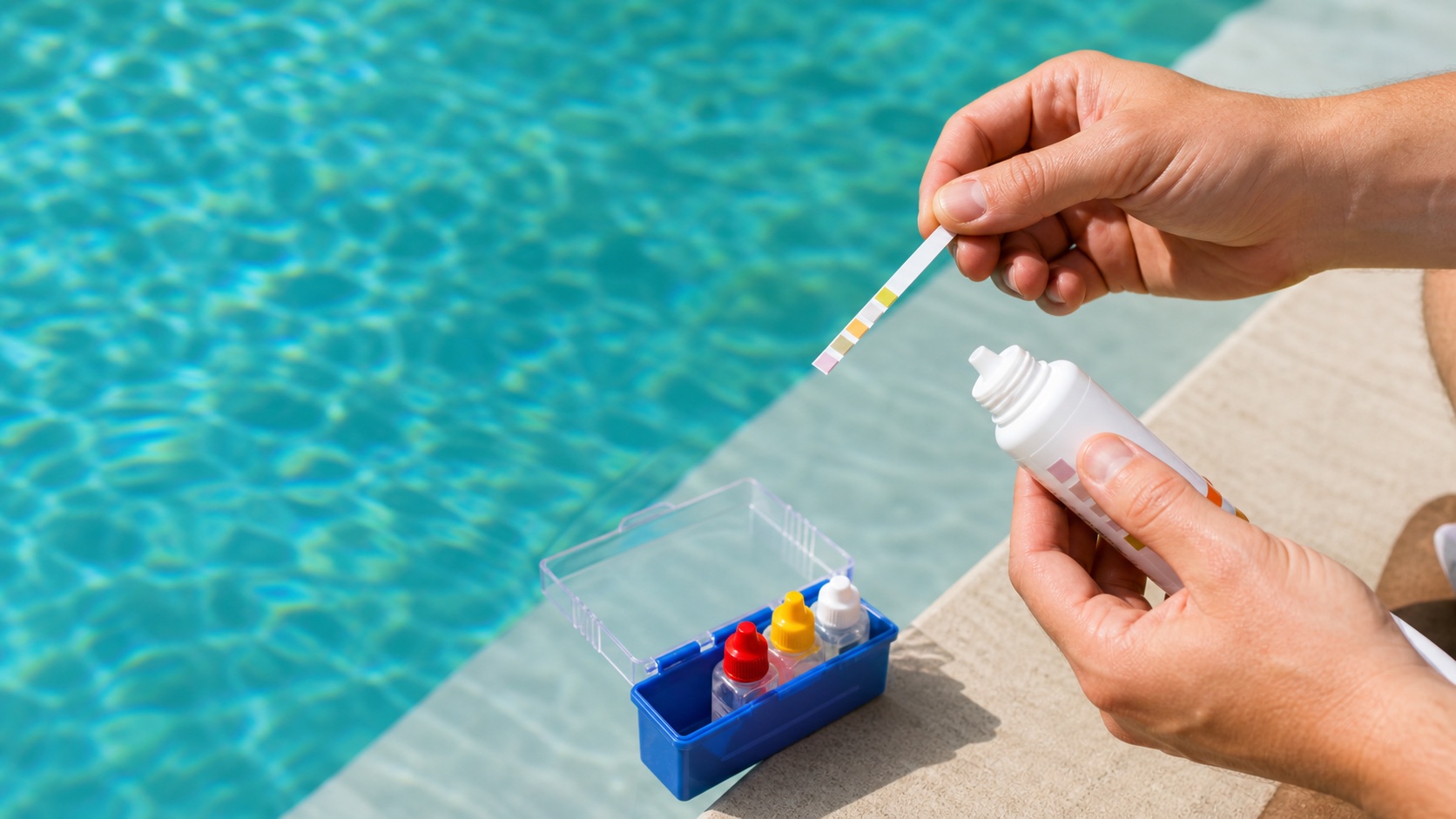
Filling the pool determines what the first week of operation will look like. If you test the fill water in advance and don’t dose the first round of chemicals blindly, you can avoid stains, scale, an overloaded filter and unnecessary draining.
Checklist before filling
| Area | Question | Risk | What to do |
|---|---|---|---|
| Water source | are you filling from the mains, a well, a tanker, or a combination? | each source carries different risks: cost, speed, pressure, metals, hardness, sediment and local rules | note the source, volume, price and fill rate in advance, and agree who will watch the water level |
| Well and metals | does the well water have iron, manganese, a smell, cloudiness, or does it brown after chlorine? | iron causes an orange/brown tint and manganese causes grey to black staining | test the fill water, use a pre-filter or treatment, and add chlorine cautiously as directed |
| Hardness and scale | is the water hard, or does it form white flakes once heated? | high hardness and pH increase scale on the liner, jets, heat exchanger and equipment | test calcium hardness, pH and alkalinity, and manage pH stability from the start with hard water |
| Tanker | do you know whether the tanker carries potable/utility water, and from where? | a fast fill is convenient, but an unclear water source can bring cloudiness, organic matter or unnecessary chemical use | ask for information on the water’s origin, clean the pool before filling, and test the values afterward |
| Mains supply | does your municipality restrict filling, or is there a risk of a pressure drop? | a long fill from the mains can cost time, water/sewage charges, and in some places breach local rules | check local rules, prepare the hose, measure the volume, and don’t leave the pool to overflow unattended |
| First filtration | does filtration start as soon as the water reaches the skimmer? | fresh water without circulation mixes poorly and reacts unevenly with chemicals | start filtration, bleed the pump, check the pressure, and filter longer than usual on the first day |
| First round of chemicals | do you test pH, alkalinity, hardness, chlorine/bromine and possibly metals before dosing? | adding chlorine blindly to well or hard water can turn it brown, milky or stained | test first, correct pH/alkalinity, address metals/a sequestrant, and only then disinfect as directed |
| When to call a service technician | is the water turning brown, black, milky, forming stains, or can’t the filter be kept clean? | this could mean high metals, manganese, extreme hardness, sediment, organic matter or an unsuitable start-up process | prepare a photo of the water, test results, the water source, pool volume, chemical doses and a timeline |
Well, mains or tanker
- Mains: usually the most chemically predictable, but can be more expensive because of sewage charges and slower.
- Well: cheap and available, but test iron, manganese, hardness, pH, alkalinity and cloudiness beforehand.
- Tanker: a fast fill without straining your home well, but ask about the water’s origin and have the pool clean and ready.
- Combination: makes sense if you need speed but don’t want to put too much problematic well water into the pool.
The first 48 hours after filling
- As soon as the level reaches the skimmer, start filtration and check the pressure.
- Test pH, alkalinity, hardness, disinfectant, and ideally iron/manganese too if using well water.
- Adjust pH and alkalinity gradually, not with one large dose.
- For water with metals, use a metal-control product proactively or arrange professional water treatment.
- Only dose chlorine or another disinfectant once the basic water check is done, and follow the label.
- Filter longer on the first day, clean the baskets, and watch the filter pressure.
- If the water turns brown, grey or milky, don’t panic: log the values and act based on the symptom.
Common mistakes
- Filling from a well without testing and then chlorinating heavily right away.
- Choosing a tanker on price alone and not asking about the water’s origin.
- Leaving the hose running unattended and overflowing the pool.
- Not calculating the pool’s volume and dosing chemicals by guesswork.
- Ignoring hardness and then having to deal with white flakes and scale.
- Switching off filtration after filling because the water “looks clean”.
Where to go next
- First filling of a pool or hot tub
- Well water, iron and manganese
- Hard water and scale
- Water values cheat sheet
- Pool volume calculator
- Service brief for a technician
Sources and context
This guide draws on recommendations for starting up a freshly filled pool, testing fill water, iron and manganese in wells, tanker water delivery, and preventing stains or cloudiness after the first disinfection. For a new pool surface, liner, laminate or equipment, the manufacturer’s manual and the installer’s instructions always take precedence.