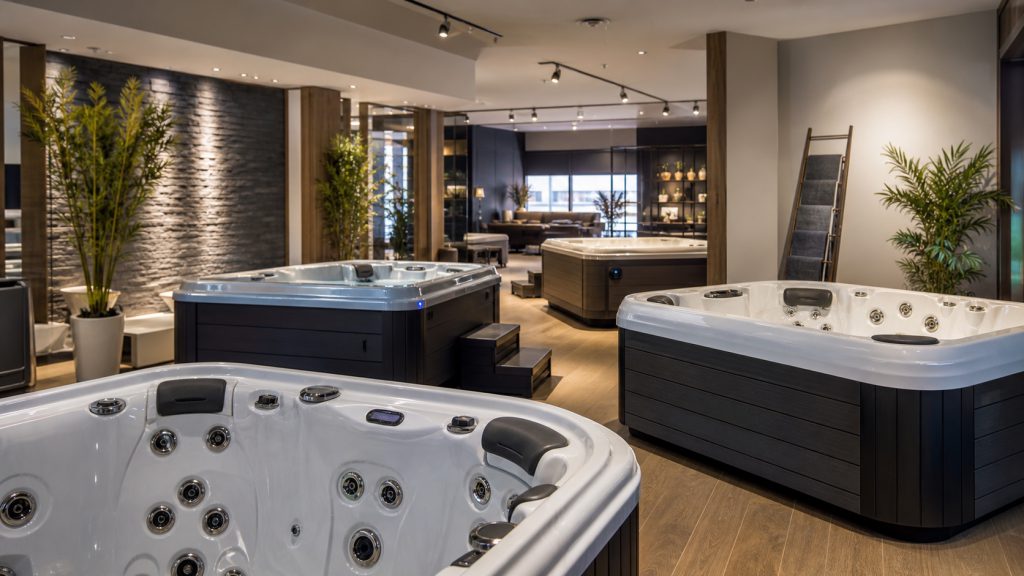
Quick answer: after filling for the first time, don’t rush straight into the water. Start the circulation first, remove debris, test pH, disinfectant, total alkalinity and hardness, adjust the values in small steps according to the label, and monitor the water for the first 24 to 48 hours.
New water often looks clean, but it may not be ready for bathing. It can have the wrong pH, hardness, metals from a well, low disinfectant, or a circulation problem. A hot tub start is more sensitive, because there’s less water, a higher temperature, and a higher load per person.
Checklist for the first 48 hours
| Step | What to check | Why |
|---|---|---|
| Water source | note whether the water is from the mains, a well or a tanker, and for a well, allow for hardness, iron, manganese or other metals | problems after filling often don’t start in the pool itself, but in the source water |
| Mechanical cleaning | clean the floor, walls, skimmer, baskets, cartridge or filter and remove coarse debris before adding chemicals | chemicals aren’t a substitute for cleaning, and clogged filtration will hurt the whole start-up |
| Start the circulation | check the water level, valves, flow, filter pressure, air in the pump, and let the water mix thoroughly | without circulation, neither the test readings nor the dosing are reliable |
| Test the basic values | test pH, disinfectant, total alkalinity and hardness, and salinity for a salt pool; take the sample cleanly and from a representative spot | pH and disinfectant are the water’s first line of defence, but a poor sample or an old test can lead to the wrong treatment |
| Adjust pH and total alkalinity before disinfection | work in small doses according to the label, let it mix in, and retest | disinfectant works less well when pH is outside the right range; fast, large doses often overshoot the target |
| Set the disinfectant | use chlorine, bromine, active oxygen or a salt chlorinator depending on the system, the label and the manufacturer’s instructions | new water isn’t automatically safe to swim in; the disinfectant needs the right level and time to work |
| The first 24 to 48 hours | filter, retest repeatedly, log the values, and don’t swim if the water is unclear, smells, or the values are outside the recommended range | the first two days will show whether the water holds its values, and whether metals, cloudiness, foam, odour or an equipment problem show up |
| When to call a service technician | call a service technician for browning, greening after chlorination, pH repeatedly crashing, zero disinfectant, weak flow, dosing errors, or an unclear odour | a quick diagnosis at the start tends to be cheaper than several days of random dosing |
When not to swim yet
- The water isn’t clear, it smells, foams, or changes colour quickly.
- You haven’t confirmed pH and disinfectant with a fresh test.
- The filtration isn’t pulling, there’s air in the jets, or you don’t know the flow rate.
- The time stated on the label hasn’t passed since dosing chemicals.
- With a hot tub, there’s an unclear odour, a slimy surface, or suspected biofilm.
Where to go next
- How to test the water correctly
- Water values cheat sheet
- Well water, iron, manganese and hardness
- Filtration and the pump after filling
- Dosing calculator by label
- When not to swim
Sources and background
For safe values and operating logic, this draws on CDC Healthy Swimming: pH and disinfectant are the basic values to control, and chemicals should be used according to the label, kept dry, stored separately, and handled safely. For a home pool or hot tub, always take into account the equipment manufacturer’s instructions and the local water chemistry.