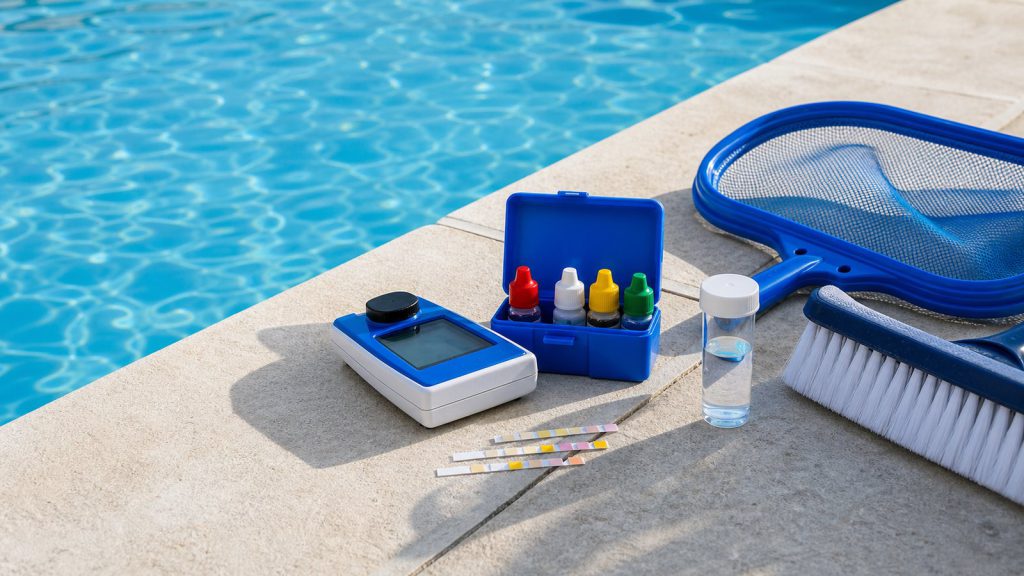
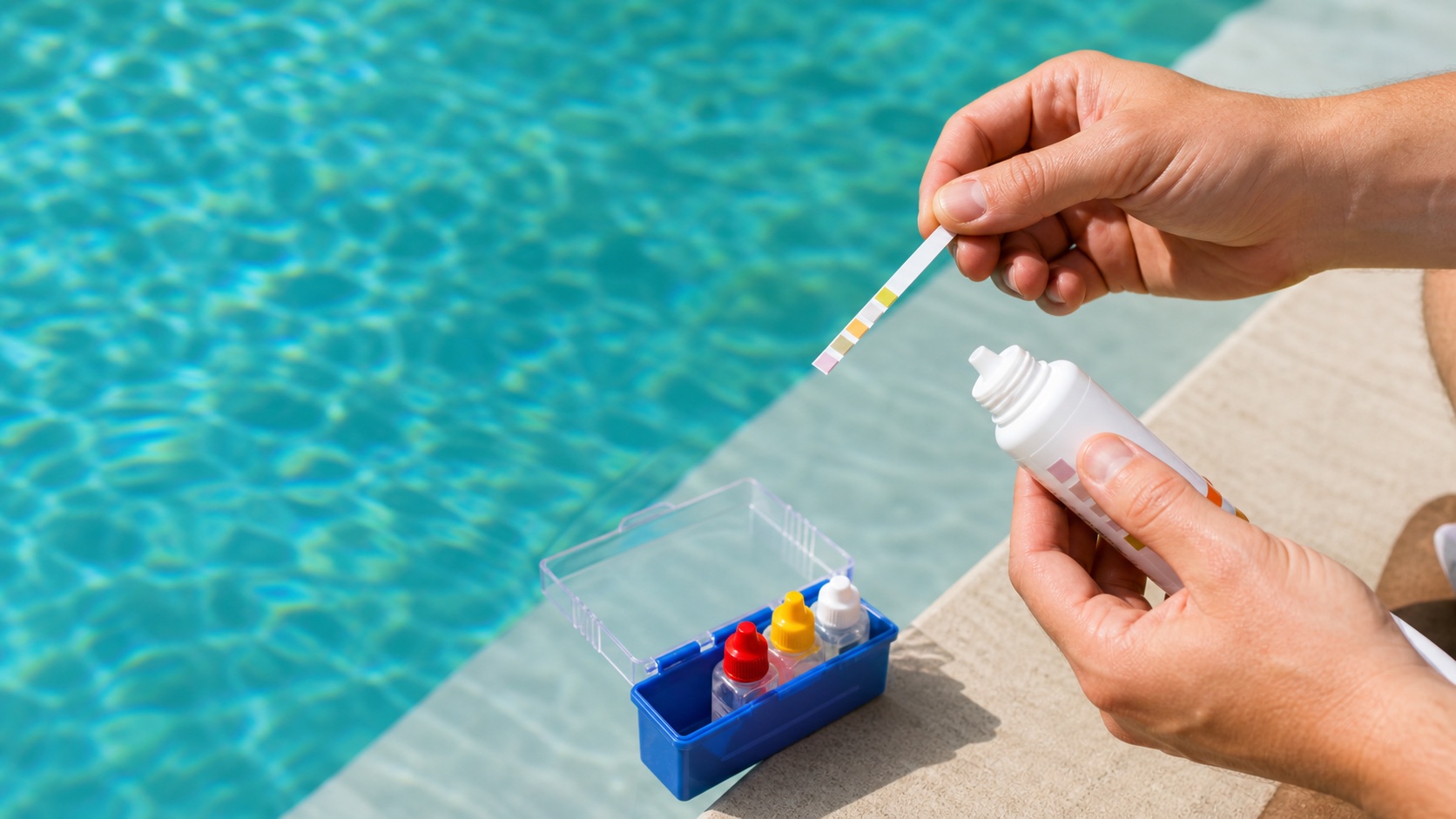
Quick answer: scale is usually linked to hard water, high pH, high alkalinity, warm water and evaporation. First test pH, alkalinity and hardness, check the source of the top-up water, clean the filter, and remove deposits according to the type of surface.
Hard water on its own doesn’t have to be a disaster. The problem starts when minerals begin precipitating on the waterline, jets, heater, salt chlorinator cell or pipework. In a hot tub it happens faster because of the warm water, small volume and frequent evaporation.
Decision table for hardness and scale
| What you see | What it might be | First step | What to avoid |
|---|---|---|---|
| A white line at the waterline or a rough film on the wall | scale, high pH, hard water, evaporation, or built-up grease mixed with minerals | test pH, alkalinity and hardness; clean the waterline mechanically with a product suited to the surface | scrubbing liner or acrylic with a harsh brush and strong chemical without checking the surface first |
| Milky cloudiness after adding a pH product | precipitated hardness, too rapid a pH change, high alkalinity, or insufficient mixing | keep filtration running, re-test pH and alkalinity once mixed, and clean the filter | adding more and more product without giving it time to filter and be re-tested |
| Scale on the jets, heater or hot tub equipment | hard water, high temperature, high pH and minerals concentrated by evaporation | check hardness, pH, the water-change interval, the filter, and the hot tub manufacturer’s recommendation | removing deposits from the heater or pump without switching off and following the service procedure |
| The salt chlorinator shows an error or the cell is scaled up | scale on the cell, incorrect salinity, pH out of range, or weak flow | test salt, pH and hardness, check the flow, and clean the cell only as the manual describes | cleaning the cell too often, or with acid that’s too strong and shortens its life |
| The problem gets worse after topping up | the source water is adding minerals, alkalinity, hardness or metals | test the top-up water and consider filtration, a scale-control product, or a partial water change | only addressing the pool water and never testing the water you’re topping up with |
| Foam in a hot tub and very soft water | low hardness, older water, cosmetics, detergent residue, or unbalanced alkalinity | test hardness, pH and alkalinity, clean the filter, and address the source of the foam, not just a defoamer | using a defoamer as a long-term fix instead of correcting the water and changing it |
| A rough surface, crystals or white flakes in the water | precipitated calcium carbonate, high pH, hardness, warm water, or a poor overall balance | log the values, filter, vacuum up the deposits, and correct the water balance in small steps | mistaking flakes for sand from the filter without checking the colour, texture and the filter itself |
| Stains and scale persist even after routine cleaning | a combination of scale, metals, the pool surface, the water’s age, or an unsuitable chemical | photograph the detail, test the water, identify the surface type, and check the approach with a service technician | combining acid cleaners, algaecides and shock doses without a clear plan |
A safe approach without chemical chaos
- Test pH, alkalinity, hardness and disinfectant with a good-quality test.
- Review the history of topping up water and evaporation.
- Clean the filter, the baskets and the waterline before adding any more product.
- Adjust pH in small steps per the label and let the water mix.
- For hard water, use scale-control products only as directed and check compatibility.
- For a hot tub, keep an eye on the water-change interval, the filter and cleaning the pipework.
- For sensitive surfaces, liner, acrylic, stainless steel parts and a salt chlorinator, read the manual.
- If scale is in the equipment, the heater, or keeps coming back, take photos and call a service technician.
When water can actually be too soft
Hardness isn’t only a problem when it’s too high. Water that’s too soft or unbalanced can be linked to foam, aggressiveness toward certain surfaces, and unstable values. That’s why it’s better to watch the whole water balance: pH, alkalinity, hardness, temperature, disinfectant and the water’s age.
Where to go next
- Short article: hard water and scale
- Water values cheat sheet
- Cloudiness after adding a pH product
- Well water, iron, manganese and hardness
- Salt pool and chlorinator
- Partial water change calculator
Sources and context
For the general framework, this guide draws on the CDC for measuring pH and disinfectant, Health Canada for testing sanitizer, pH, alkalinity and calcium hardness, and the Better Health Channel on how both low and high water hardness can damage surfaces or create deposits. Always verify specific ranges and products against your equipment and the label.