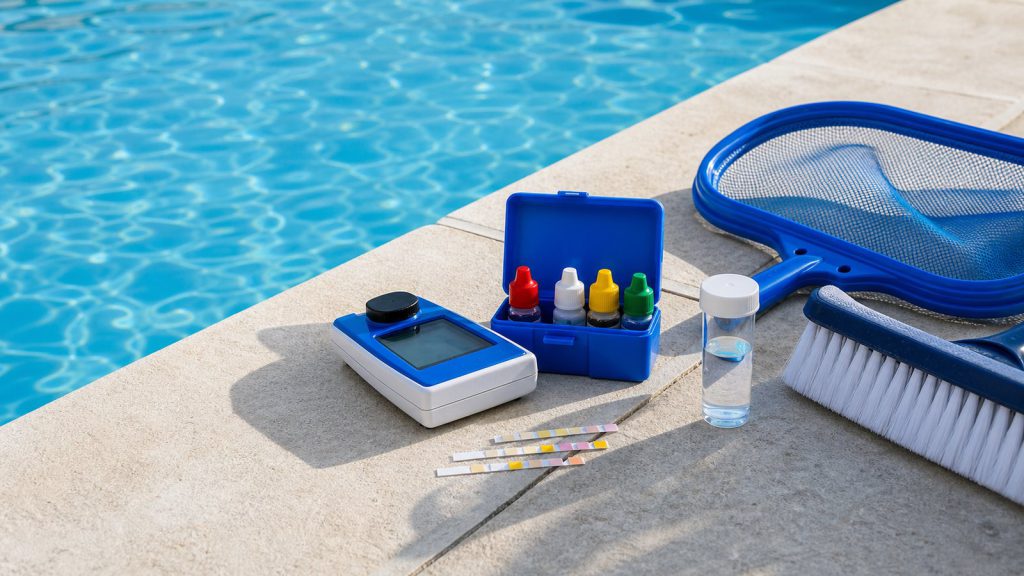
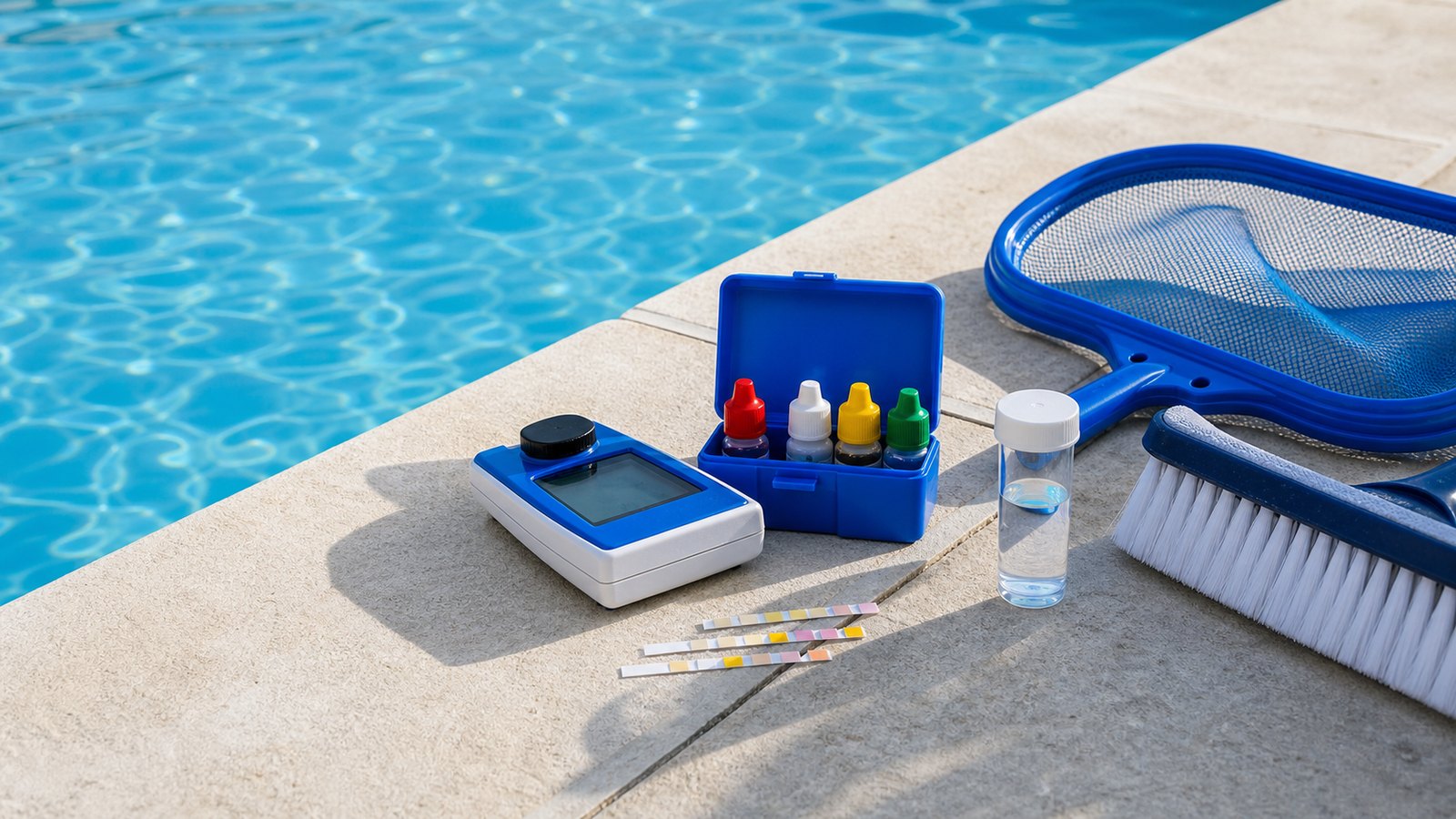
Quick answer: if the water is still cloudy after a flocculant or clarifier, don’t add another dose right away. First work out which product you used, check pH, disinfectant and the filter, let the floc settle, and vacuum the sediment very slowly as the equipment allows. Don’t swim in cloudy water until you can see the bottom and the values are in order.
Flocculant and clarifier often get lumped together, but they work differently. A clarifier binds fine particles together so the filter can catch them. A flocculant forms heavier clumps that are meant to settle on the bottom and must be removed carefully. Mix up the process and the water can end up looking worse than before you started.
Checklist after a flocculant or clarifier
| Area | Question | Risk | What to do |
|---|---|---|---|
| Safety | can you clearly see the bottom, the steps and the main drain at the deepest point? | cloudy water reduces oversight of bathers and can signal a hygiene problem | don’t swim until the water is clear and the values are confirmed by a test |
| Type of product | did you use a clarifier, or a true flocculant? | a clarifier is meant to work through the filter; a flocculant is meant to let debris settle and is usually vacuumed to waste | check the label and the manufacturer’s instructions; don’t mix up the process for different products |
| pH and disinfectant | were pH and free chlorine or bromine correct before you used the product? | poor pH, low disinfectant or live algae will just turn a flocculant into an expensive way to stir up the cloudiness | re-test pH, alkalinity and disinfectant, and for green water deal with sanitizing first |
| Filtration | is the filter clean, correctly connected and giving enough flow? | a clarifier without an effective filter won’t remove fine particles, and a flocculant can clog the filter | clean the baskets, the filter and check pressure/flow; for cartridge or DE filters confirm the product suits that filter type |
| Time to settle | did you leave the water undisturbed for long enough after using the flocculant? | running the jets, a robot cleaner or swimming will lift the floc back into the water | let the water stand as long as the label says, don’t run a robot, then vacuum very slowly |
| Vacuuming | are you vacuuming the sediment to waste, or returning it through the filter back into the pool? | fine floc gets stirred back up if you vacuum too fast or use the wrong mode | vacuum slowly, ideally to waste depending on your equipment; watch the water level and re-test after topping up |
| Overdosing | did you add a second dose right away because you didn’t see results? | too much clarifier or flocculant can create further milky cloudiness, a sticky film, or clog the filter | stop adding more chemical, filter/clean/vacuum according to the product type, and wait for a measurable result |
| When to call a service technician | does the water stay milky after repeated filter cleaning, vacuuming and correct values? | this could be calcium, high alkalinity, a damaged filter, fine dust, algae, metals or the wrong product | prepare photos of the water, the label of the chemical used, pH/alkalinity/disinfectant/hardness/CYA readings and the filter’s condition |
A calm, step-by-step approach
- Stop adding more clarifier, flocculant or “quick fixes” until you know the cause.
- Check the label: a clarifier usually works through the filter, while a flocculant usually needs calm water and the sediment vacuumed up.
- Test pH, free chlorine or bromine, alkalinity, and depending on the situation, hardness or CYA.
- For green water, deal with algae and disinfection first; a flocculant should clear particles, not replace proper sanitation.
- Clean the skimmer, the pump’s pre-filter and the filter; watch the pressure and flow.
- If sediment has settled on the bottom, vacuum slowly so it doesn’t go back into the water.
- After topping up the water, re-test the values, since topping up shifts the chemical balance.
- If the problem returns, address the cause of the cloudiness: filtration, pH, alkalinity, hardness, organic matter, algae or fine dust.
Common mistakes
- Adding another dose the very next day just because the water isn’t clear yet.
- Turning on a robot cleaner or counter-current jet before the floc has settled.
- Vacuuming too fast and lifting the sediment back into the water.
- Using a flocculant with a filter or piece of equipment the manufacturer advises against.
- Treating cloudy green water with flocculant instead of fixing disinfection and algae first.
- Ignoring high pH, high alkalinity, hard water or a clogged filter.
Where to go next
- pH keeps drifting and alkalinity
- How to test the water correctly
- Water values cheat sheet
- Pool filtration and pump
- Algae and stains in a pool
- Hard water and scale
- Service brief for a water problem
Sources and context
This guide draws on CDC Healthy Swimming for the importance of pH, disinfection, chemical safety and warnings about cloudy water, on PHTA materials on testing pH and alkalinity, and on practical instructions from pool chemical manufacturers, which distinguish a clarifier that works through the filter from a flocculant that’s removed from the bottom. The specific product label and the filtration manufacturer’s manual always take precedence.