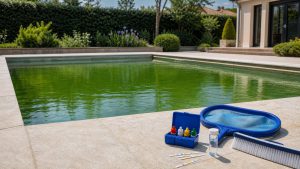
Quick answer: First measure pH, free chlorine and alkalinity, check the filtration, and only then consider a flocculant or clarifier.
Milky pool water can look similar but have different causes. Sometimes it is incorrect pH, other times fine particles, weak filtration, high hardness, or a reaction after a chemical treatment.
Most common causes
Cloudiness often results from a combination of several small problems. It is therefore better to start with measurement and filtration than to blindly add more products.
- pH outside the recommended range
- low or exhausted disinfection
- fine particles the filter cannot catch
- clogged filter or short filtration time
- high hardness and calcium
Step-by-step procedure
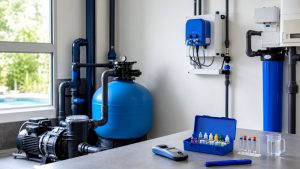
Let the filtration run longer, clean the filter and adjust the values. A flocculant only makes sense once you know the water is chemically within a reasonable range.
- measure pH, chlorine and alkalinity
- backwash the sand filter or clean the cartridge
- adjust pH
- for slight cloudiness use a clarifier or flocculant depending on the filter type
- vacuum sediment slowly from the bottom
When to call a service company
If cloudiness keeps returning even with correct values and long filtration, the problem may lie in the flow, the filter media, the piping or the chemical dosing.
Related guides
This article is original editorial guidance by Spa Pool News. For chemicals, electrical equipment and service work, always follow the manufacturer’s instructions and safety recommendations.
Next step
Planning a similar pool, hot tub or wellness project?
Move from inspiration to the company directory, a clear request or a regular editorial selection.