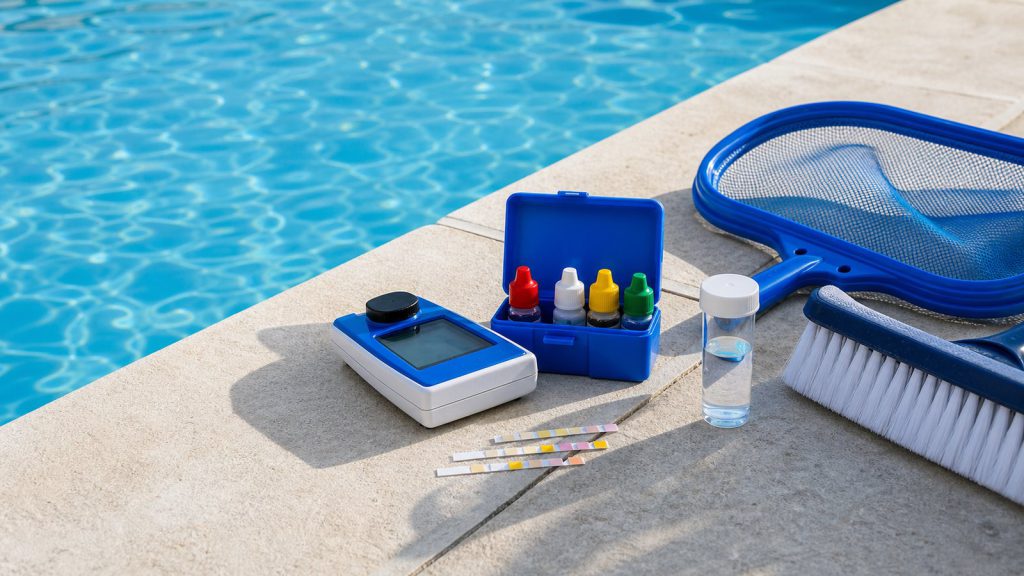
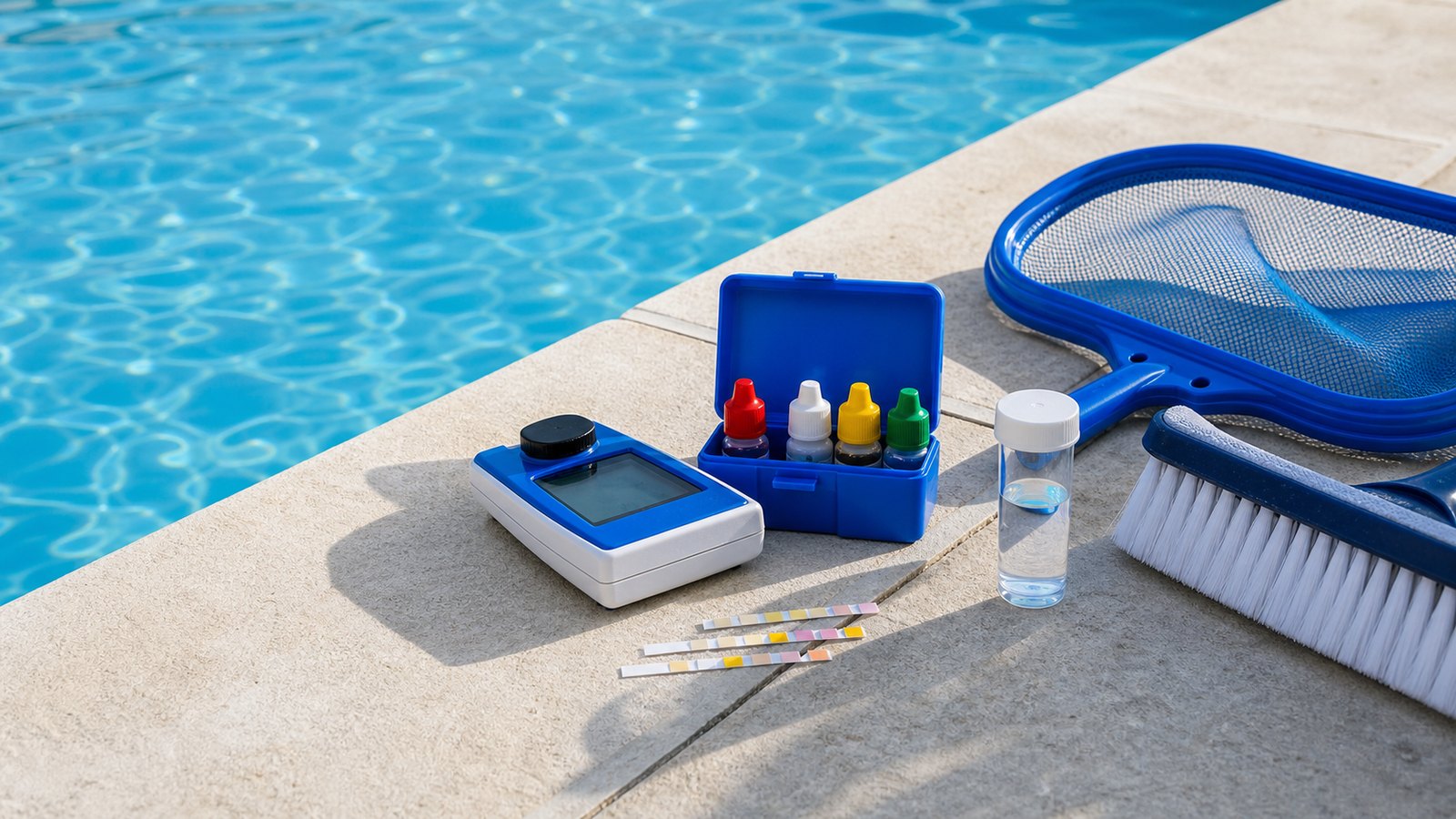
Quick answer: good photos get you a faster reply from a company. Don’t just photograph a close-up of the problem. Also send the overall view, the surroundings, the equipment, the data plates, access, and the water test, if it’s a water-quality issue.
This photo cheat sheet covers enquiries for a new build, a service problem, a water leak, an enclosure, and a company profile too. The more precise the information a company receives, the fewer follow-up questions it needs, and the better it can estimate the scope of work.
What to photograph, by situation
| Situation | What to photograph | Why | Continue |
|---|---|---|---|
| New pool or hot tub | the whole garden area, the access route, the installation spot, the electricity connection, water, drainage, and any obstacles nearby | The company can quickly gauge access, how difficult installation will be, site readiness, and price risks. | open | open | open |
| Water problem | the water close up, the whole pool or hot tub, the floor, the waterline, a test strip or drop test, and the filtration | The colour of the water alone isn’t enough; a photo helps connect the symptom with the readings and the equipment. | open | open | open |
| Equipment fault | the equipment’s data plate, the full wiring/piping, a close-up of the error on the display, the pump, filter, valves, the pressure gauge reading, and the surrounding space | A service technician needs to identify the type of equipment, how it’s wired, and whether the problem is flow, electrics, or a setting. | open | open | open |
| Water leak | the water level, damp patches, the equipment, pipework, skimmer, jets, the area around the pool, and the suspected spot | Photos help tell evaporation, a visible leak, and a problem in the equipment or pipework apart. | open | open | open |
| Enclosure or cover | the pool from every side, the edges, paving, the rail run, obstacles, steps, changes in level, and the space needed to slide it open | For an enclosure, millimetres matter — the space around the pool, how it’s operated, and safety requirements. | open | open | open |
| Company profile or references | a finished project, equipment close-ups, before-and-after shots, the team at work, a clean overall view, material close-ups, and permission to use the photos | Good photos build trust in a profile, and let our editorial team write a more specific article. | open | open | open |
Rules for good photo documentation
- Shoot in daylight, and don’t just take one close-up.
- Take one overall view, then a few close-ups.
- For equipment, always photograph the data plate and the full wiring/piping.
- For water, include the current test readings and the date.
- For a build, include the access route, widths and any obstacles.