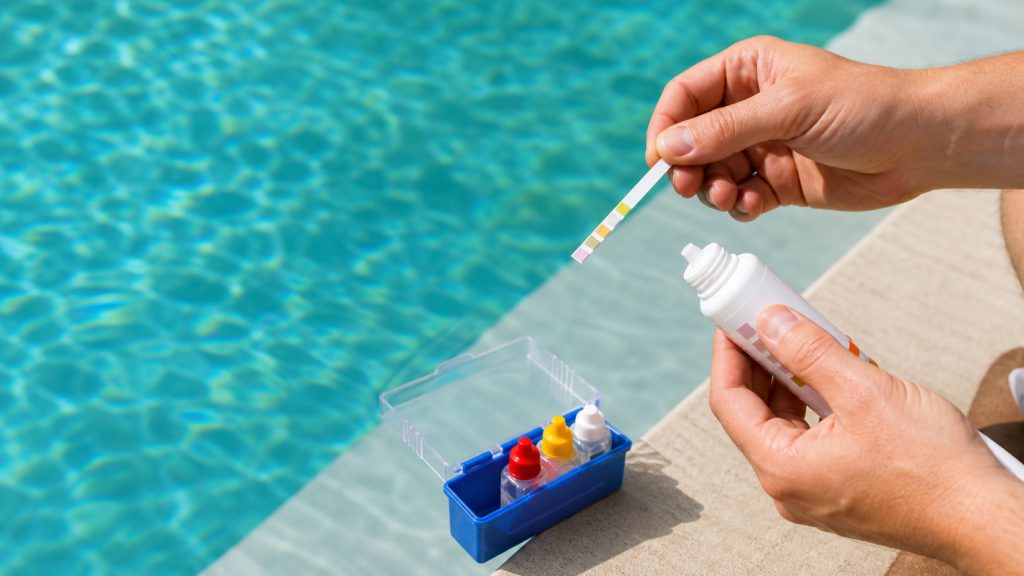
Quick answer: in hot weather, test the water more often, extend filtration, watch the temperature, free chlorine or bromine, and always re-test pH and alkalinity after topping up. An overheated pool goes bad faster, and a hot tub in summer isn’t “maintenance-free” just because it’s used less or set to a lower temperature.
Hot days combine several problems at once: stronger sun, more swimming, sweat and sunscreen, faster evaporation, topping up water, and higher temperatures. A single weekly check often isn’t enough. The goal isn’t to add chemicals blindly, but to test and act before the water turns green.
Checklist for hot days
| Area | Question | Risk | What to do |
|---|---|---|---|
| Water temperature | do you measure the pool or hot tub temperature during hot spells too? | warm water uses up disinfectant faster, encourages biological growth, and raises the health risk in a hot tub | log the temperature, shorten hot tub sessions, test pH and disinfectant more often, and act before the water turns green |
| Sun and chlorine | is free chlorine disappearing faster than usual, or is the pool in full sun all day? | UV and a heavier bather load can use up chlorine before you test the water in the evening | test morning and evening, check CYA for an outdoor pool, and dose based on the test, not the calendar |
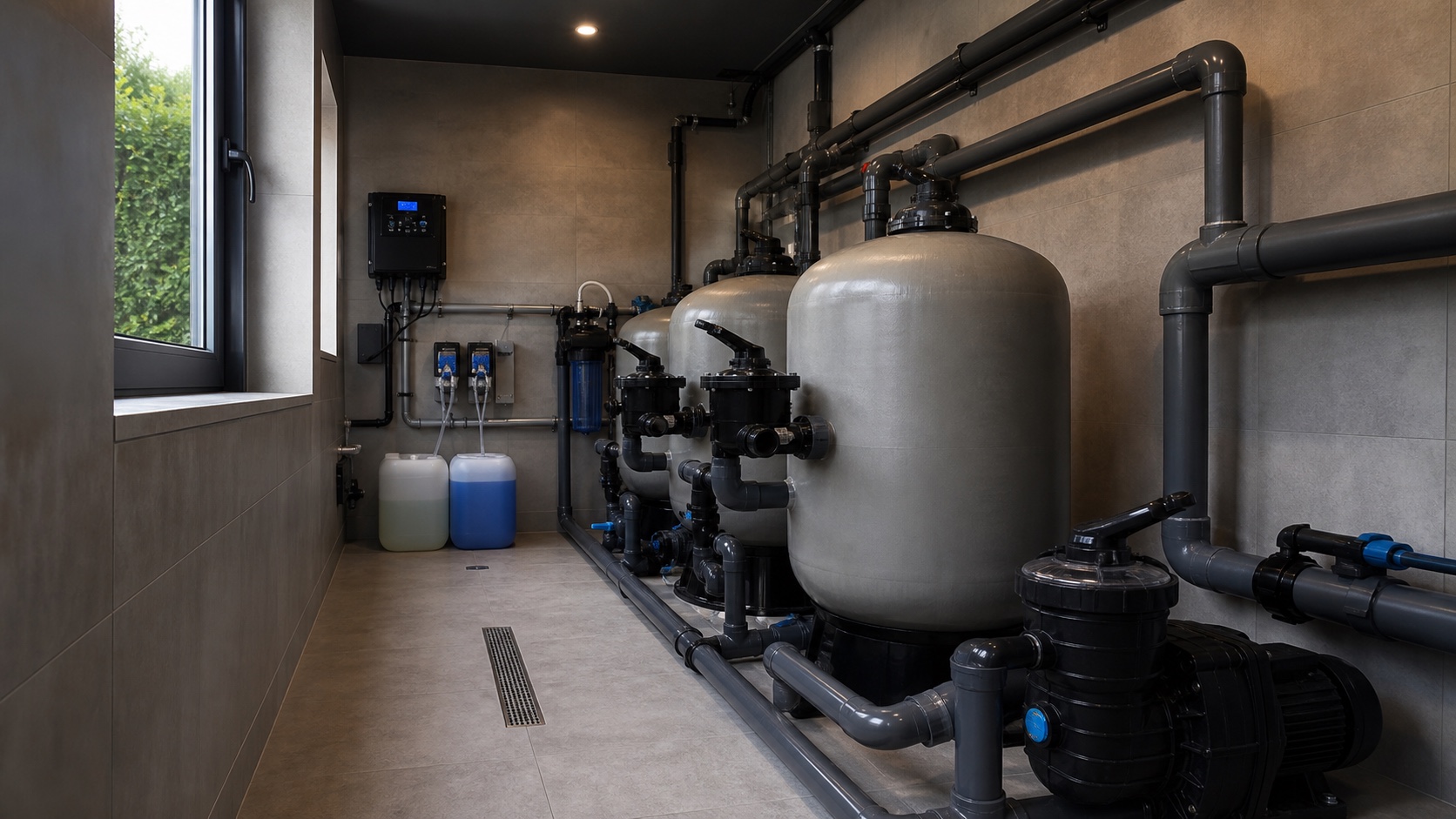
| Filtration | does filtration run for the same length of time in hot weather as in spring? | short filtration in warm water isn’t enough to mix disinfectant through and catch organic matter | extend the daily filtration run, run a longer cycle after swimming, and monitor pressure/flow |
| Evaporation and topping up | is the water level dropping faster, and are you frequently topping up with fresh water? | evaporation concentrates substances in the water; topping up changes pH, alkalinity, hardness, salt or CYA | tell evaporation apart from a leak, test the water after topping up, and use a cover when the pool isn’t in use |
| Covering and enclosures | is the pool left uncovered all through the heat, or is the cover used the wrong way? | without a cover, evaporation increases; with a cover on during the day, the water can actually get hotter and hygiene can suffer | use a cover mainly against evaporation and heat loss, but in extreme heat watch temperature and ventilation |
| Hot tub | are you keeping the hot tub at a high temperature in summer too, and is it used often? | a small volume, heat, jets and heavy use quickly spoil the water and can overheat bathers | lower the temperature, shorten sessions, clean the filter more often, test before swimming, and close the water if there’s a smell or foam |
| Visitors and children | in hot weather, are there more people in the water, more children, sunscreen and longer swims? | organic load, sweat and cosmetics use up disinfectant and can create chloramines, foam or cloudiness | shower before swimming, do a mechanical clean in the evening, extend filtration, and check the values in the morning |
| When to call a service technician | is the water clouding, turning green, is chlorine dropping to zero, or is the level falling more than normal evaporation would explain? | the cause could be weak filtration, poor dosing, high CYA, a leak or an equipment problem | prepare a log of readings, temperature, filtration time, top-ups, photos of the water and equipment, and contact a service technician |
Step-by-step procedure
- Test pH, disinfectant and water temperature in the morning; if there are issues, add alkalinity, hardness, CYA or salt.
- In hot weather, extend filtration and run a longer cycle after swimming to mix the water.
- Skim off organic matter and pollen before it uses up disinfectant.
- After topping up the water, re-test the values, since fresh water can shift the balance.
- Use a cover against evaporation, but watch that the water underneath doesn’t get too hot in extreme heat.
- For a hot tub, lower the temperature, shorten sessions, clean the filter more often, and close it if there’s a smell, foam or uncertain values.
- In the evening after heavy use, check free chlorine or bromine, how the water looks, and the filter.
Common mistakes
- Leaving filtration running as short as it did in the cold season.
- Topping up water without testing what it did to pH, alkalinity, hardness or salt.
- Mistaking normal evaporation for a leak, or the reverse — ignoring a real leak because of the weather.
- Keeping a hot tub at a high temperature in the heat without addressing water hygiene.
- Adding chlorine without checking CYA on an outdoor pool and without checking pH.
Where to go next
- Overheated pool in summer
- Chlorine disappearing from the pool
- How long filtration should run
- Evaporation or a water leak
- Pool covers and hot tub thermal covers
- Sunscreen, cosmetics and foam
- Service brief for a water problem
Sources and context
This guide draws on CDC Healthy Swimming for the importance of pH, disinfection and the safe use of hot tubs, on CDC information about chloramines, and on practical pool-care logic for evaporation, covering the surface and extending filtration on hot days. For specific chemicals and equipment, the manufacturer’s manual always takes precedence.