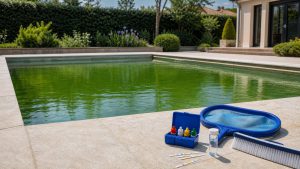
Short answer: If there’s stool or vomit, stop swimming immediately, remove the contamination, follow proper hygiene, and disinfect the water according to health guidance.
This is a health-sensitive topic. Home pool owners often underestimate the difference between ordinary dirt and fecal contamination.
How to identify the cause
- Visible stool or vomit.
- A young child without a swim diaper.
- Diarrhea or illness in someone bathing.
- Cloudiness and organic debris.
What to do now
- Get everyone out of the water immediately.
- Remove the contamination with tools, not bare hands.
- Clean the tools and filter according to the level of contamination.
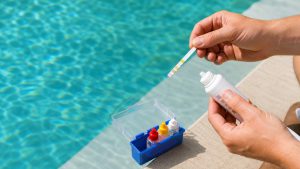
- Test the pH.
- Follow the health-authority procedure for disinfection and closure time.
When it’s better not to swim
- Always, after a fecal accident, until the disinfection procedure is complete.
- When someone had diarrhea.
- When disinfection can’t be verified.
Prevention
- Don’t let children with diarrhea into the pool.
- Use suitable swim diapers.
- Take regular bathroom breaks.
- Shower before swimming.
When to call a service technician
For larger contamination, public operation, or uncertainty, consult the health authority or a professional service company.
FAQ
Is it enough to scoop out the visible mess with a net?
No. Visible dirt is only part of the problem. What matters is the disinfection procedure and the time swimming is suspended.
Is urine in the pool the same problem?
Urine mainly increases chloramine formation and odor. Stool and vomit are more serious hygienically.
Sources
- CDC – water testing in home pools and hot tubs
- CDC – hot tub safety
- HealthLink BC – safe water quality in home pools and hot tubs
- CDC – operating pools and hot tubs, disinfection and pH
Next step
Planning a similar pool, hot tub or wellness project?
Move from inspiration to the company directory, a clear request or a regular editorial selection.