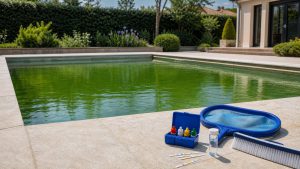
Quick answer: Clear green water often means metals, not algae. First adjust the pH, use a metal-removal product and filter; only add shock chlorine based on measured values.
People often describe the water as clear but colored. That’s a different problem from cloudy green water full of algae. With well water and some tap water sources, disinfection can oxidize metals and the water turns green or brown.
- Iron, manganese or copper in the source water.
- Oxidation of metals after adding chlorine.
- Low alkalinity and fluctuating pH.
- Corrosion of metal parts or unsuitable copper-based products.
- Check whether the water is clear or also cloudy.
- Measure the pH and adjust it according to the chemical instructions.
- Use a metal-removal or metal-stabilizing product.
- Let the filtration run and clean the filter regularly.
- If cloudiness forms, use a flocculant and vacuum the sediment.
- Next time, when filling from a well, use a metal-removal product preventively.
- Don’t confuse clear discoloration with algae.
- Don’t repeatedly shock-chlorinate the water without measuring.
- Don’t use copper-based products if you’re already dealing with copper.
- For well water, get an analysis or at least watch the reaction after chlorinating.
- Clean the filtration and pipework before the season.
- Keep the pH stable so metals don’t precipitate as much.
Call an expert if the metals return after every top-up, stains appear on the liner, or you’re not sure which chemicals suit your equipment.
Can I identify metals with test strips?
Regular strips usually measure pH and disinfectant, not iron or copper precisely. A lab analysis or a specialized test will help.
Is clear green water safe for swimming?
Without measuring disinfectant and pH, this can’t be confirmed. Color alone isn’t enough to judge hygiene.
Next step
Planning a similar pool, hot tub or wellness project?
Move from inspiration to the company directory, a clear request or a regular editorial selection.