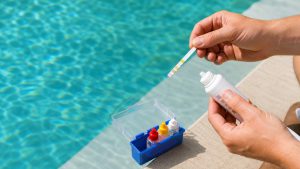
In a heatwave, a pool behaves differently than it does during an ordinary summer. Water that was sitting around 24°C in June can easily climb to 29–32°C by August without shading, and from that point on the chemistry of the whole system changes: chlorine disappears faster, algae grows more easily, and a small lapse in maintenance can turn into a green haze within two days. This guide explains why that happens, and what to do — both immediately and long-term — to keep an overheated pool clean and safe to swim in.
Why warm water speeds up algae growth and chlorine consumption
Chemical and biological processes in water respond to temperature in a similar way: the warmer it gets, the faster they run. As a rule of thumb, for roughly every 10°C rise in temperature, the rate of most chemical reactions and microbial growth roughly doubles or triples. A pool whose water is 8–10°C warmer in summer than in spring therefore “uses up” disinfectant and feeds algae noticeably faster, even though nothing looks different on the surface.
Two further effects come into play on hot days. Strong sunlight breaks down free chlorine through UV radiation (photolysis), so disinfectant levels drop even without a single swimmer in the water. And warm water also holds less dissolved oxygen and offers better conditions for algae photosynthesis, so even a small amount of nutrients — pollen, dust, sweat or cosmetics from bathers’ skin — leads to cloudiness much faster than in cooler periods.
The result: a pool that “forgave” a day without testing without any trouble in May can turn green within 24 to 48 hours in an August heatwave. That’s why hot days change not just how much chemical you use, but above all how often you check.
What to do right now, while the heat lasts
The following steps aren’t a one-off fix but a routine you repeat every day during a heatwave:
- Test the water daily, ideally twice. In the morning before use starts, and in the evening after the day’s bather load.
- Adjust chlorine dosing based on actual consumption, not habit. If free chlorine repeatedly drops to zero by evening, increase the dose or the dosing frequency.
- Extend filtration through the hottest part of the day. Filtration should cover the hours of strongest sunlight (roughly 11am–5pm).
- Retest and re-chlorinate as needed after every period of heavy bather use.
- Clean the filter and surface more often. A clogged filter loses effectiveness faster in the heat.
- Retest pH and chlorine every time you top up the water. Evaporation is stronger in the heat, and fresh water shifts the pool’s chemical balance.
Long-term solutions: shading, night-time operation and cooling
- Shading. A parasol, a shade sail over part of the pool, or planting trees reduces both direct heating of the water and UV breakdown of chlorine. Use solar and thermal covers mainly at night, though — during the day in direct sun they act like a greenhouse.
- Night-time filtration. Running the filtration overnight as well helps mix the water and even out the chemistry, and often works out cheaper thanks to lower night-time electricity rates.
- Cooling technology. A heat pump with a cooling function, overnight cooling, or partially replacing overheated water with fresh water.
Smaller and above-ground pools overheat considerably faster than large in-ground pools, because they have less water volume relative to the surface exposed to the sun.
How to prevent overheating next time
- Log your readings and treatments. A simple diary of pH, chlorine and re-chlorination dates will show exactly how your pool responds to heat.
- Keep the filtration and filter permanently in good condition.
- React immediately to heavier use. After a party or a storm, test and adjust the chemistry the same day.
- Follow the manufacturer’s instructions for the pool, hot tub and chemicals used.
Specific values for hot days
| Parameter | Target value in heat | Note |
|---|---|---|
| pH | 7.0–7.4 (ideal 7.2) | Outside this range chlorine disinfects far less effectively, even if there’s enough of it. |
| Free chlorine | 1–3 mg/l | In overheated water, check daily — morning and evening if possible. |
| Filtration time | roughly half the water temperature in hours | Water at 28°C ≈ 14 hours, split into blocks through the day and possibly overnight. |
When to call a service company
Routine maintenance is enough for normal fluctuations, but call a professional service company if chlorine or cloudiness problems keep recurring even after adjusting dosing and filtration, the water smells or irritates swimmers’ skin or eyes, you’re not sure about your equipment type, or cloudiness doesn’t clear even after extended filtration and you suspect a technical fault.
Frequently asked questions (FAQ)
At what water temperature is a pool considered overheated?
The rough threshold is around 28–30°C. Above this temperature, chlorine breakdown and algae growth both accelerate significantly.
How often should I test the water in a heatwave?
Daily, ideally in the morning before use starts and in the evening after the day’s bather load.
Do I need to increase chlorine dosing in summer?
Often yes, because UV radiation and higher temperatures break chlorine down faster. Always adjust dosing based on measured values, not a fixed routine.
How long should filtration run in hot weather?
As a rough rule, filtration time in hours equals about half the water temperature (water at 28°C ≈ 14 hours), split into several blocks through the day and possibly overnight.
Does a pool cover help against overheating?
Yes, but only if used at night. During the day in the sun, a solar or thermal cover acts like a greenhouse and actually heats the water further.
When should I call a service company about an overheated pool?
When chlorine or cloudiness problems keep recurring even after adjusting dosing and filtration, the water smells or irritates skin or eyes, or cloudiness doesn’t clear even after extended filtration.
Get help with your water in the heat
Handling an overheated pool yourself is doable, but sometimes it pays to bring in a professional. Submit a request and compare quotes from vetted service companies, or browse the company directory by region and specialisation.
Next step
Planning a similar pool, hot tub or wellness project?
Move from inspiration to the company directory, a clear request or a regular editorial selection.