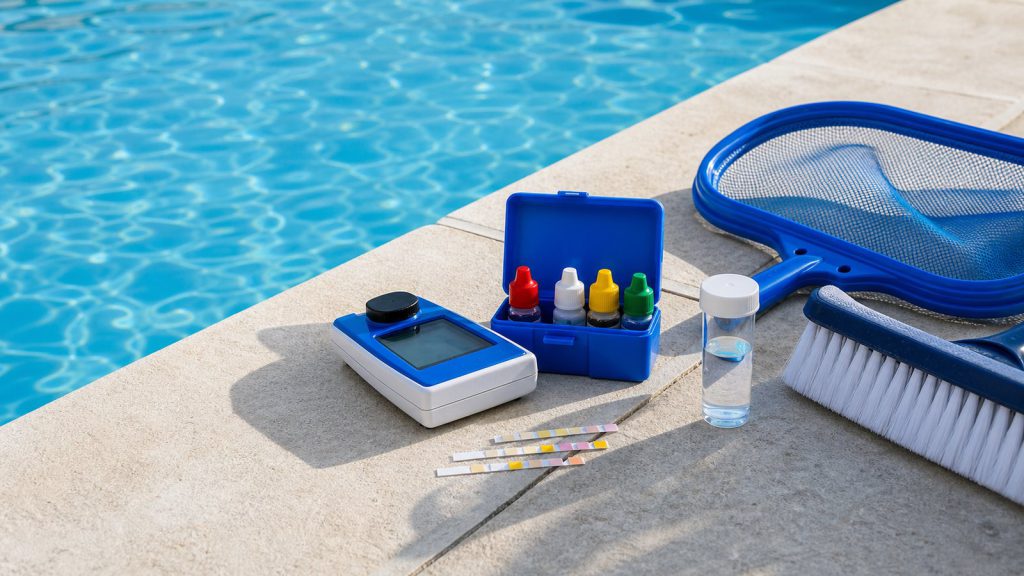
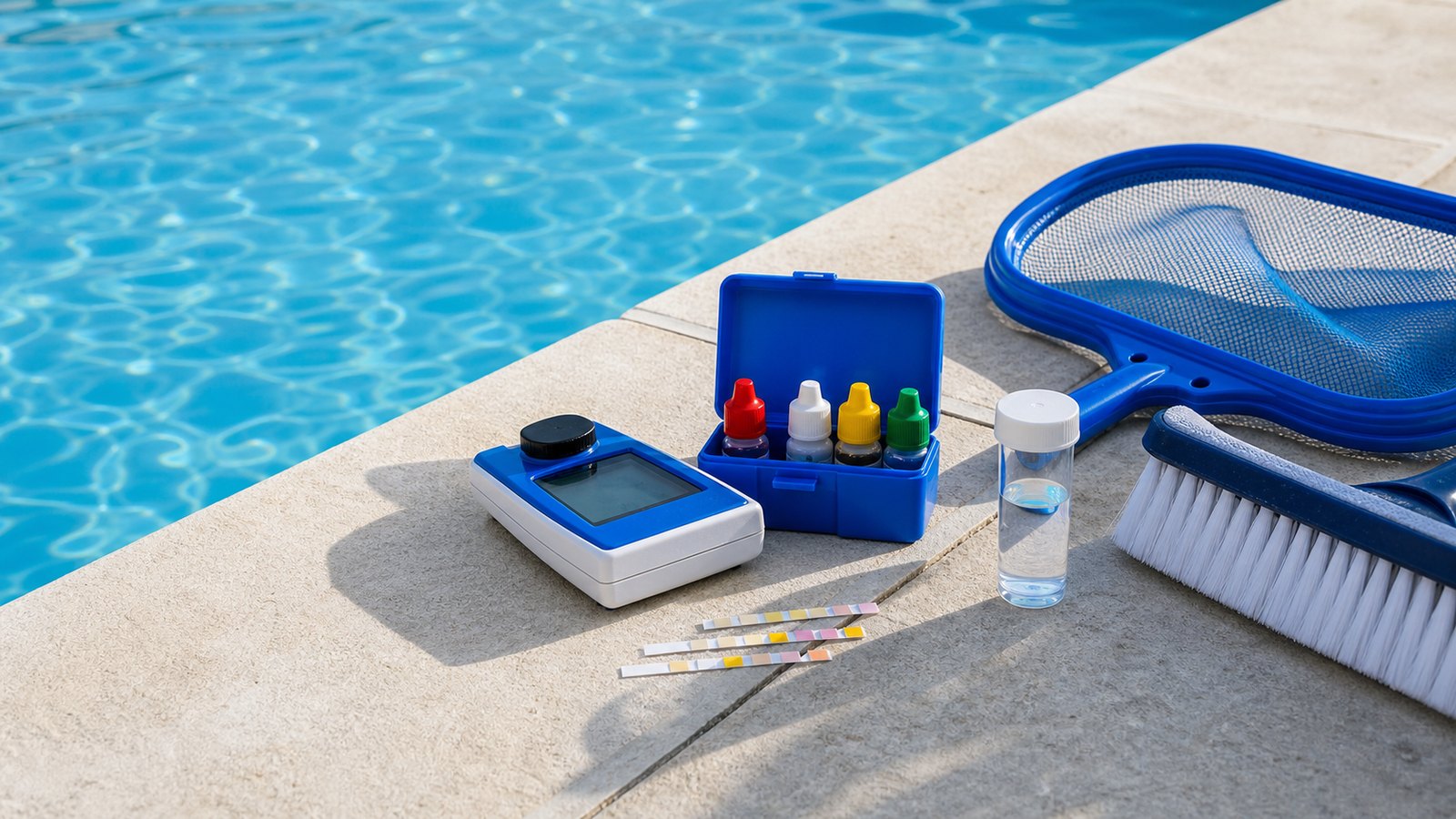
Quick answer: when pH keeps drifting, don’t just treat the pH. First confirm the test, measure total alkalinity, temperature and disinfectant, then adjust the water in small steps. Low alkalinity causes unstable pH, while high alkalinity often holds pH up and keeps owners adding pH minus over and over.
pH governs bathing comfort, disinfectant efficiency and the formation of cloudiness or scale. But if the value keeps bouncing back every day, the problem is usually in the water’s buffering capacity, fresh water, aeration, the type of chemical used, or inaccurate testing. This guide helps you find the cause before water treatment turns into an endless cycle of adding product.
Diagnosing pH and alkalinity
| Area | Question | Risk | What to do |
|---|---|---|---|
| Test first | are you testing pH with a fresh test, and not right after dosing chemicals? | an old or skewed test leads to dosing blind | re-test pH, free chlorine/bromine, alkalinity and temperature; with very high chlorine, wait as instructed by the test before reading pH |
| Low alkalinity | is total alkalinity low and pH bouncing up and down? | the water has no buffer, so every swim, rainfall or dose of chemical shifts pH sharply | first raise alkalinity gradually with a product per the label, then re-test once it has mixed in |
| High alkalinity | is alkalinity high and does pH keep climbing back up? | pH is hard to lower, the water may form cloudiness or scale, and it puts more strain on dosing | lower pH in smaller steps, let the water circulate, and also address hardness and the source water |
| Jets, aeration and a salt chlorinator | do you often run air jets, a waterfall, a counter-current or a salt chlorinator? | aeration and some equipment can push pH up over the long term | cut back on unnecessary aeration, check the salt chlorinator’s mode, and tune alkalinity to match real-world use |
| Rain and refilling | did pH go off after rain, filling up, or frequent topping up? | fresh water changes alkalinity, hardness, pH, CYA or salt, and old dosing habits stop working | after any significant top-up, run a full test and adjust values in the order alkalinity, pH, disinfectant |
| Hot tub | are you dealing with pH in a hot tub with a small volume and frequent jet use? | a small volume reacts faster, and pH can shift after just one session | test before swimming, dose in small steps, clean the filter, and address biofilm too if there’s foam or a smell |
| Acid tablets and stabilizer | do you use trichlor/dichlor tablets or stabilized chlorine long-term? | some products can push pH and alkalinity down while also raising CYA | track CYA, alkalinity and pH together, and plan a partial water change if CYA gets high |
| When to call a service technician | can pH not be held even after repeated testing and reasonable corrections? | it could be a faulty test, dosing equipment, probe, source water, hardness or an equipment fault | prepare a history of values, photos of tests, the water volume, the chemicals used, and have the dosing or automation checked |
An order of steps that makes sense
- Test pH, free chlorine or bromine, total alkalinity and water temperature with a fresh test.
- If you’ve just shocked with chlorine or dosed acid, don’t draw conclusions from a reading taken right after.
- When alkalinity is low, bring it up gradually first, or pH will keep swinging.
- When alkalinity is high, lower pH in smaller doses and expect the tuning to take longer.
- After topping up, rain, or a partial water change, re-test the whole baseline, not just pH.
- Dose a hot tub more cautiously than a pool, because a small volume reacts fast.
- If you have automatic dosing, calibrate the probe and cross-check it against a manual test.
Typical scenarios
- pH is always low: check acid tablets, low alkalinity, pH minus dosing and frequent rain.
- pH is always high: watch for high alkalinity, hard water, aeration, waterfalls, a salt chlorinator and fresh water.
- pH keeps bouncing up and down: usually a missing stable alkalinity, or testing at the wrong moment.
- the water is milky: pH and alkalinity may be tied to hardness, scale, weak filtration or poor flocculation.
- eyes sting: it isn’t always “too much chlorine” — often the problem is pH, chloramines and insufficient oxidation of contaminants.
Where to go next
- pH and alkalinity calculator
- Water values cheat sheet
- How to test the water correctly
- Pool smells like chlorine and eyes sting
- Hard water and scale
- High CYA chlorine stabilizer
- Automatic pH and ORP dosing
Sources and context
This guide draws on CDC Healthy Swimming for the recommended pH range and the importance of disinfectant, on PHTA/APSP materials on total alkalinity, and on public health guidance on why pH affects both chlorine efficiency and bathing comfort. Always calculate specific doses based on your water volume, the product label and the equipment manufacturer’s manual.