Quick answer: start with safety. If the water smells, feels slimy, the bottom isn’t visible, you don’t know the values, or anyone has had problems after swimming, don’t swim. Then follow the right guide for your symptom.
This decision tree helps you pick the right first step, instead of dosing chemicals at random.
Does the water smell, feel slimy, is the bottom not visible, or has anyone had health problems?
Don’t swim. First open the safety checklist, test the values, and depending on the situation, deal with cleaning, changing the water, or calling for service.
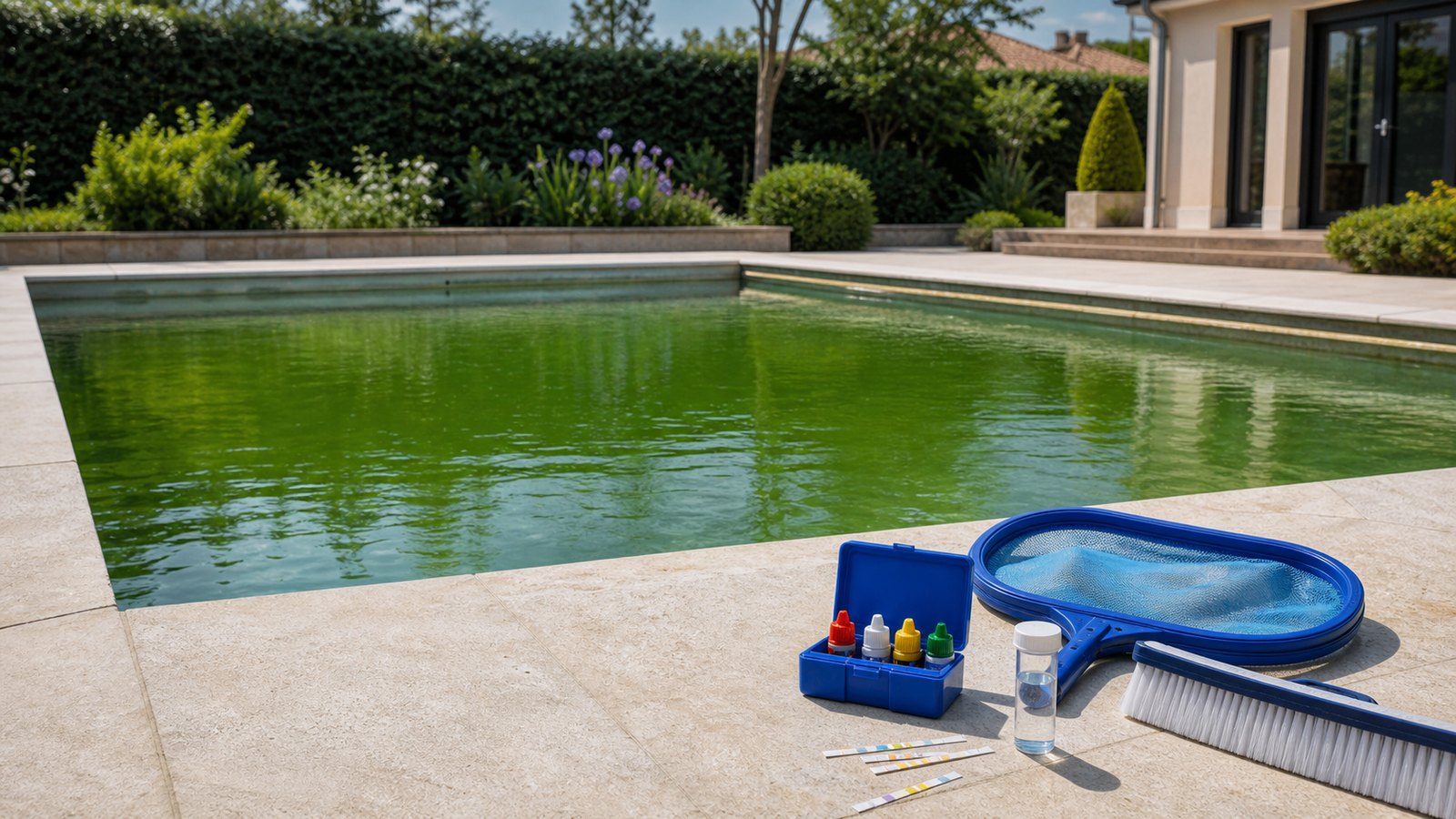
Is the water green and cloudy?
This is most often algae, low disinfectant, poor pH, or weak filtration. Test pH/chlorine, clean the filter, and follow the guide for green water.
Is the water clear, but greenish, brown or rust-coloured?
Suspect metals in the water, mainly iron, copper or manganese. Don’t add more chlorine blindly; address pH, a metal-treatment product, and filtration.
Is the hot tub water foaming, or does it have a greasy film?
This is usually cosmetics, sweat, detergent in swimwear, a dirty filter, or old water. Clean the filter, test pH/total alkalinity, and consider changing the water.
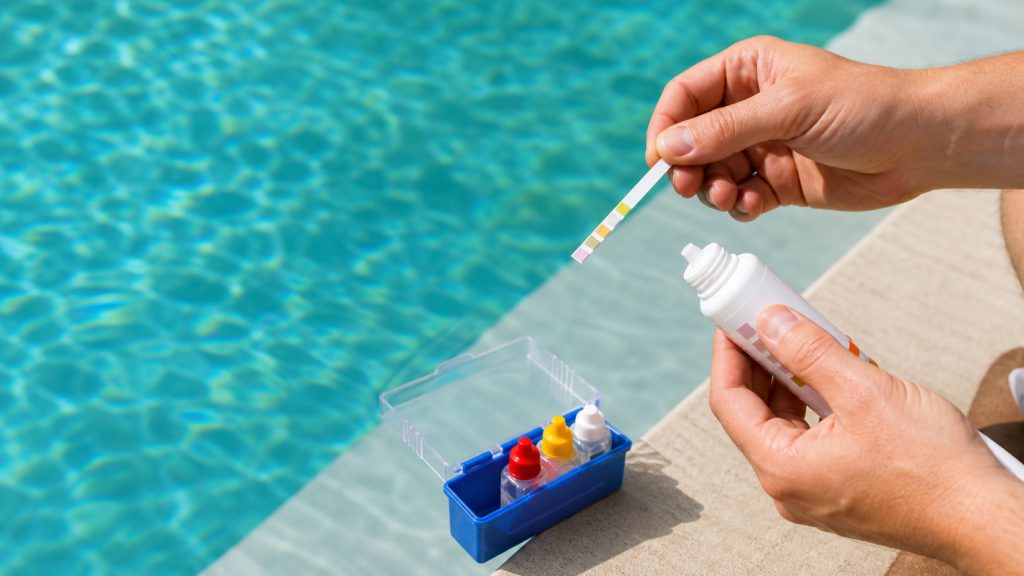
Does the tester show bad readings, but the water is clear?
Trust a verified test, not just how the water looks. Check the tester, total alkalinity, pH and the disinfectant level.
Have you added too much chlorine or bromine?
Stay out of the water. Ventilate, keep the filtration/circulation running, and only get back in once the values are back in the safe range.
Is the filtration not working, or has the water not circulated for a long time?
Limit swimming, remove debris by hand, restore the flow, and test the water. Without circulation, the chemicals don’t mix in and the water deteriorates fast.
Not sure what values the water should have?
Start with the values cheat sheet. Track pH, chlorine or bromine, total alkalinity, hardness, temperature and clarity.
Does the problem keep coming back, or do you want to contact a service company?
Prepare photos, the water values, the type of filtration, the water source and a list of chemicals used. A service brief improves your chances of a fast, accurate reply.
If you’re not sure
First test the water, record the values, and use the diagnostics tool by symptom. If the problem is a health risk, keeps coming back, or the filtration isn’t working, prepare a service brief.