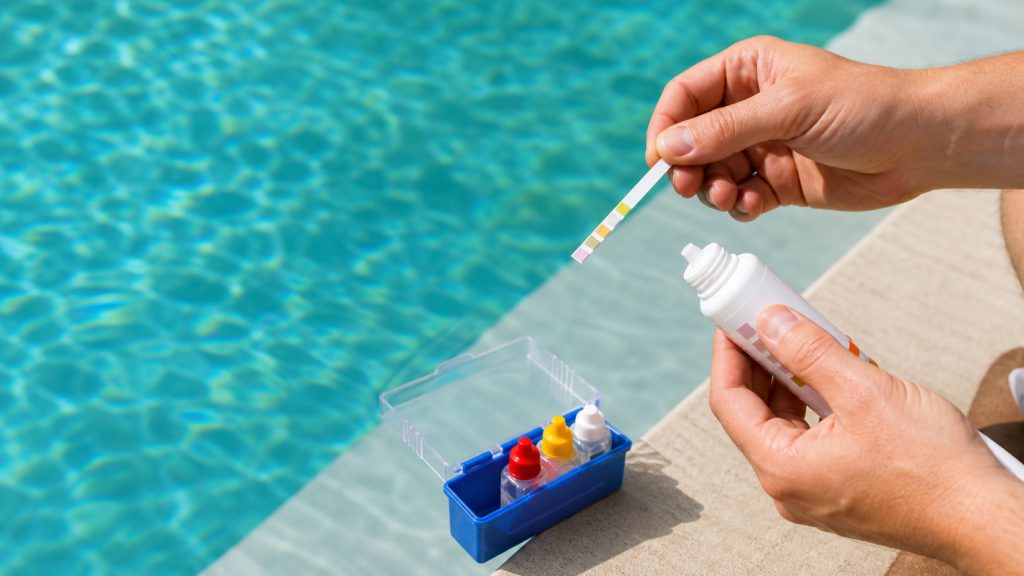
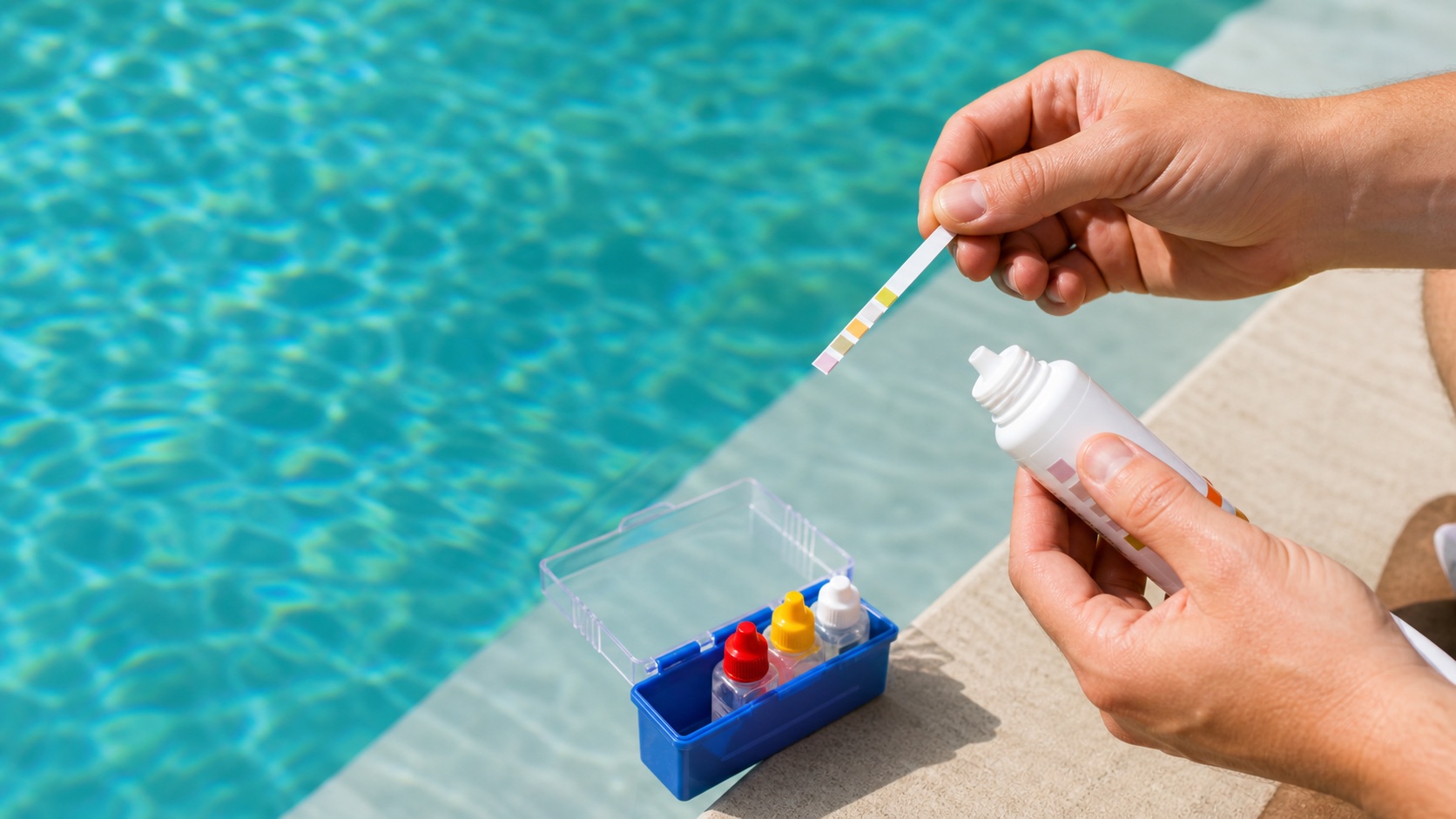
Quick rule: test pH and disinfectant first, and check the filtration. Colour, odour or foam can hint at the cause, but a safe decision is made from the readings.
This page works as a diagnostic map. If you know how the water looks or smells, you’ll find the most likely cause and the first safe step. Stricter hygiene rules apply for health problems, faecal contamination or public facilities.
Diagnostic table
| Symptom | Most likely cause | First step | Detail |
|---|---|---|---|
| Green and cloudy pool water | algae, low disinfectant, incorrect pH or weak filtration | test pH and free chlorine, clean the filter, shock the water and filter continuously | Open guide |
| Clear green water after filling | iron, copper or manganese in the source water | don’t over-chlorinate blindly; adjust the pH, use a metal-removal product and filter | Open guide |
| Brown or rusty water | iron, manganese or organic debris | adjust the pH, stabilise the metals, use flocculant suited to your filtration type, and vacuum up the sediment | Open guide |
| Milky or grey water | high pH, hardness, dead algae, fine particles or the filter | test total alkalinity and pH, clean the filter, filter for longer and consider a clarifier | Open guide |
| Foam in a hot tub | cosmetics, sweat, detergent residue in swimwear, low hardness or old water | test pH/total alkalinity/hardness, clean the filter, remove any greasy residue, and change the water if the foam keeps coming back | Open guide |
| Musty, fishy or sharp odour | organic matter, chloramines, weak disinfectant, a dirty filter or biofilm | don’t swim, clean the filter, test the water and oxidise or change the water depending on the result | Open guide |
| Slimy walls or a pink coating | biofilm and long-term weak hygiene control of the water | clean the surfaces by hand, shock the water, clean the filter, and clean the pipework on a hot tub | Open guide |
| Clear water but bad tester readings | invisibly low disinfectant, pH out of range, or a testing error | check the test, adjust total alkalinity and pH, then the disinfectant; don’t take clarity as proof of safety | Open guide |
| Chlorine or bromine is too high | overdosing, a shock treatment, automatic dosing, or a small water volume | don’t swim, let it air out, filter/circulate, and wait for the readings to reach a safe range | Open guide |
| The water goes bad after a gathering | sweat, cosmetics, sunscreen, urine, a heavy bathing load and depleted disinfectant | test after the gathering, clean the filter, top up the disinfectant/oxidiser, and run the filtration longer | Open guide |
| The filtration isn’t working, or the water isn’t circulating | a clogged basket, a low water level, an airlock, a pump fault, or weak flow | limit swimming, remove debris by hand, check the baskets/hoses, and restore the flow | Open guide |
| Rash after a hot tub | contaminated water, biofilm, incorrect pH, or irritation from the disinfectant | don’t use the hot tub, test the water, clean the filter and pipework; see a doctor if problems persist | Open guide |
An order of checks that saves time and chemicals
- Stop swimming if the water smells, is slimy, you can’t see the bottom, or you don’t know the disinfectant reading.
- Test pH, free chlorine or bromine, and total alkalinity, and for recurring problems, also hardness and stabiliser.
- Clean the skimmer, the baskets, the cartridge, or backwash the sand filtration.
- Stabilise pH and total alkalinity first, then address the disinfectant.
- After a treatment, let the water circulate and retest before swimming.
The most common mistake
The most common mistake is adding more chemicals without testing. With green water this sometimes helps, but with metals, high pH, poor total alkalinity or clogged filtration, it just makes the problem more expensive and drags it out.