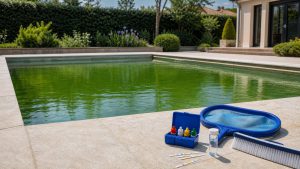
Quick answer: If the water turns brown after filling from a well, iron or manganese is often reacting. First stabilise the pH, address the metals and filtration, not chaotic dosing of multiple products.
Well water can look fine while filling, but change colour after contact with disinfectant. This doesn’t automatically mean dirty water — it’s often just dissolved metals becoming visible.
How to recognise a metal problem
It’s typical for the water to turn brown or take on a rusty tint after chlorine is added. Fine deposits can form on the bottom and the filter clogs quickly.
- rusty or tea-coloured tint
- discolouration after chlorination
- deposits on the bottom
- stains on the liner or steps
What not to mix
The biggest mistake is adding more and more products without giving them time to react and filter. With metals, the wrong approach can make the problem worse.
- don’t repeatedly add chlorine without measuring
- don’t combine several flocculants at once
- don’t use copper-based products if you’re dealing with metals
- don’t scrub stains aggressively without knowing the surface
Practical procedure
Adjust the pH, use a metal-removing product, filter and slowly vacuum up any deposits. For a recurring problem, it’s worth having the source water analysed.
Where to go next
This text is original editorial content by Spa Pool News. It serves as a practical guide for pool, hot tub and wellness owners; always follow the manufacturer’s instructions and the recommendations of your service company for specific equipment.
Next step
Planning a similar pool, hot tub or wellness project?
Move from inspiration to the company directory, a clear request or a regular editorial selection.