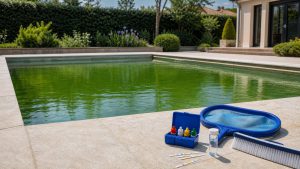
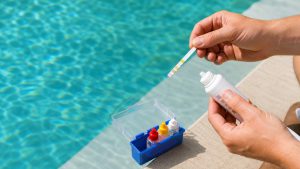
Winterizing looks simple: add some chemicals, throw on a cover, lock the shed. But that’s exactly where most of the damage that only shows up in spring gets its start — cracked pipework, corroded fittings, green water, or a torn liner. The fallout from a single mistake often costs more than the rest of the winterizing job combined. Here are the 10 most common mistakes with pools and hot tubs, why they matter, and how to avoid them.
1. Winterizing too late — waiting for the first frost
The most expensive mistake of all. If you winterize only after the first hard frosts, you risk the water freezing in the skimmer, jets, and pipework before you manage to drain the equipment. Ice takes up more volume than water and will split plastic and metal from the inside — a cracked skimmer or a buried pipe means digging up the yard in spring and a repair costing anywhere from a few hundred to several thousand euros.
Do it right: Winterize as soon as the water temperature drops consistently below 10–12°C, usually in the second half of October through the first half of November. Colder water is actually an advantage — algae and bacteria barely grow in it, so it stays clean longer. Don’t wait for overnight frost; by then it’s already too late.
2. Water left in the pipework, pump, and filter
Even if you winterize on time, damage comes from the water that’s left behind in the equipment. Just a few decilitres in the pump or the heat pump exchanger is enough — it freezes, expands, and cracks the cast-iron or plastic housing. The fault typically only shows up when you fire the system back up in spring and it starts leaking.
Do it right: Drain water from every circuit — the pump, filter, hoses, exchanger, and salt chlorinator. Unscrew the drain plugs, blow out the pipework (with a compressor or a blower-mode vacuum), and plug the open fittings with winterizing caps. For a heat pump, follow the manufacturer’s instructions — the exchanger is the part most sensitive to frost.
3. Skipping the winterizing chemicals — assuming “nothing will happen over winter”
Algae barely grow in cold water, but their life cycle doesn’t stop entirely. Without a winterizing agent and residual disinfectant, a few milder winter days or an early spring warm-up can turn the water into a green, cloudy mess. Refilling with fresh water and doing a shock treatment then costs you time, chemicals, and water bills.
Do it right: Balance the water before covering it, run a light shock chlorination, and add a winterizing (non-chlorine) algaecide sized to your pool’s volume. It suppresses algae growth for the whole winter. If cloudy water still shows up in spring, our guide on what to do about green pool water can help.
4. Poor pH and unbalanced water going into winter
The water you leave in the pool over winter sits against the equipment and the walls for four to five months without mixing or filtration. Low pH (acidic water) drives corrosion of metal parts and eats away at joints, while high pH and hard water precipitate scale on the walls, the liner, and in the jets. Either way, you won’t see it until spring — and by then it’s much harder to fix.
Do it right: Adjust the pH to 7.0–7.4 before winterizing and check the water hardness. Balanced water gets through winter without corrosion or scale buildup. It’s a five-minute job with a test kit that saves you a much bigger spring cleanup.
5. Too low a water level on a liner pool
A common myth says a pool should be almost fully drained for winter. For a liner pool, that’s a mistake that will ruin the liner. Once the water level drops below the jets, the exposed liner dries out over winter, turns brittle in the frost, and cracks along the seams by spring. A fully drained liner pool can also be pushed up by groundwater.
Do it right: Lower the water level only slightly — below the skimmer and jets (typically 10–15 cm below the jets) — so no water remains in them, while the liner itself stays mostly submerged and protected. Add floating winterizing objects (polystyrene noodles, PET bottles) to cushion the ice pressure on the walls.
6. Hot tub: residual water in the jets and pipework
Winterizing a hot tub is even trickier than a pool, because the plumbing running to the jets is long and full of bends where water easily gets trapped. Even a small amount of undrained water in a jet or the pump will freeze over winter and crack it — and repairing plumbing embedded in a hot tub’s shell is among the most expensive jobs there is.
Do it right: Drain the hot tub completely, including the sediment on the bottom. Blow out the jets and pipework, vacuum out residual water from recesses and the filter, and remove and clean the filter cartridges, storing them somewhere dry and warm. If you’re leaving the hot tub filled outdoors over winter instead, it must run in winter heating mode — otherwise you risk total failure. Our article on how much a hot tub costs to run per month covers both running costs and winterizing.
7. Neglected or unsuitable covering
A summer solar cover won’t survive winter. Moisture builds up under the thin film, leaves collect and rot, staining the water, and snow tears straight through it. Without proper covering, organic debris builds up in the pool over winter, leading to black sediment and odors by spring.
Do it right: Use a winter cover rated for frost, or a solid enclosure. Tension the cover so water and snow can’t pool on it, and secure it against wind. If you’re still deciding on a permanent solution, our comparison in how to choose a pool enclosure can help.
8. An unwinterized sand filter
The filter is often overlooked during winterizing — and it’s actually one of the most vulnerable components. Water trapped in the filter tank and the multiport valve will freeze and split both the filter body and the valve. Replacing the tank and valve isn’t cheap.
Do it right: Drain the filter via the drain plug, let the water run out of the valve too, and set the valve to the winter position (“Winter,” or between positions) so the seals aren’t under pressure. If the tank can be disconnected, store it somewhere dry. This is also a good time to check the condition of the filter media — see our guide on sand filter backwashing and sand replacement.
9. Storing equipment in freezing conditions
Draining the equipment is only half the job — the other half is storing it somewhere it won’t freeze. The pump, control unit, salt chlorinator, doser, and heat pump all contain electronics, seals, and residual moisture. Left in an unheated shed or outside under a tarp, the seals crack and the electronics get damp.
Do it right: Store any removable equipment (pump, controller, filter cartridges, salt chlorinator) in a dry, heated room above freezing. Winterize a permanently installed heat pump according to its manual and fit a cover to protect it from snow and leaves. For a summary of what to check before winter and what to leave to a service provider, see end-of-season pool service: what to book.
10. No checks over winter
The final mistake is passivity — “winterized, done,” and nobody looks at the pool for four months. Meanwhile the cover can work loose, tear under the weight of snow, ice can build right up to the walls, or drainage can clog. Catching this early is the difference between simply re-tensioning a cover and a full spring repair.
Do it right: After any significant snowfall or strong wind, check on the pool and hot tub. Clear snow off the cover, check its tension and the ice floats, and confirm the covering is still holding. A few minutes after a storm can save you thousands.
Summary: what to watch out for above all
| Area | Most common mistake | Do it right |
|---|---|---|
| Timing | Winterizing only after the frost hits | At a water temperature below 10–12°C |
| Equipment | Water left in the pump and pipework | Drain, blow out, plug |
| Chemicals | Skipped algaecide | Winterizing agent + balanced water |
| Water | pH out of range | pH 7.0–7.4, balanced hardness |
| Water level | Liner pool almost fully drained | 10–15 cm below the jets |
| Covering | Summer solar cover | Winter cover or enclosure |
Avoiding these ten mistakes takes an afternoon and a modest outlay on chemicals and plugs. Neglect them and you risk burst pipes, corroded equipment, and green water to start your spring with. Once the snow melts, follow up a properly executed winterizing with a proper spring start-up — for the step-by-step process, plus a year-round maintenance rhythm, see our weekly pool maintenance schedule.
Frequently asked questions
When is the best time to winterize a pool?
As soon as the water temperature drops consistently below 10–12°C, usually from late October through the first half of November. Algae barely grow in cold water, so it stays clean for longer. The key is not to leave winterizing until after the first frosts, when the water risks freezing inside the equipment.
Should I fully drain a liner pool for winter?
No. Fully draining it damages the liner — exposed liner material dries out, turns brittle in the frost, and cracks. Only lower the level below the skimmer and jets (roughly 10–15 cm below the jets), so no water is left in them while the liner stays mostly submerged and protected.
What happens if I skip the winterizing chemicals?
Without a winterizing algaecide and residual disinfectant, milder winter days and an early spring warm-up can turn the water green and cloudy. Come spring, you’ll then need a shock treatment or a full water change. A winterizing agent suppresses algae growth throughout the winter.
How do I winterize a hot tub so it doesn’t crack?
Drain the hot tub completely, including the sediment, blow out the jets and pipework, vacuum residual water out of any recesses, and remove the filter cartridges. Any water left behind in the jets or pump will freeze over winter and crack them. If you leave the hot tub filled outdoors, it must run in winter heating mode.
Do I need to check on the pool even after winterizing it?
Yes. After any significant snowfall or strong wind, clear snow off the cover and check its tension and the ice floats. A loose or torn cover, or ice built up against the walls, can cause damage over winter that a timely check would have prevented.
Where should I store the pump and filter over winter?
Store the drained pump, control unit, salt chlorinator, and filter cartridges in a dry, heated room above freezing. In an unheated shed or outdoors, the seals crack and the electronics get damp. Winterize a permanently installed heat pump according to its manual and cover it.
Don’t want to winterize it yourself, or not confident about the equipment? Hire a service company to do the job properly — submit a request and compare quotes from vetted companies in your area.
Next step
Planning a similar pool, hot tub or wellness project?
Move from inspiration to the company directory, a clear request or a regular editorial selection.