Quick answer: if a heat pump isn’t heating the pool, first check your expectations for heating speed, the pool cover, water flow, filter cleanliness, the bypass, airflow around the unit, the outdoor temperature and any error codes. Don’t touch the electrics or the refrigerant circuit yourself.
A heat pump is an efficient way to heat a pool, but its output depends on the weather, water volume, placement, covering and flow. It’s often not broken — it’s just working in conditions where it can’t deliver the expected temperature rise.
Heat pump checklist
| Area | What to check | Why |
|---|---|---|
| Heating speed expectations | compare the water volume, the required temperature rise, the pump’s output, the weather and the pool cover | a heat pump is efficient, but it isn’t instant heating; a large pool without a cover heats slowly |
| Pool cover | cover the pool mainly overnight, in wind, and whenever it’s not in use | without a cover, evaporation and wind can carry away a large part of the heat delivered |
| Water flow | check the filter, pre-filter, valves, bypass, air in the system and the minimum flow rate specified by the manufacturer | low flow can trigger a flow fault, reduced output, or a protective shutdown |
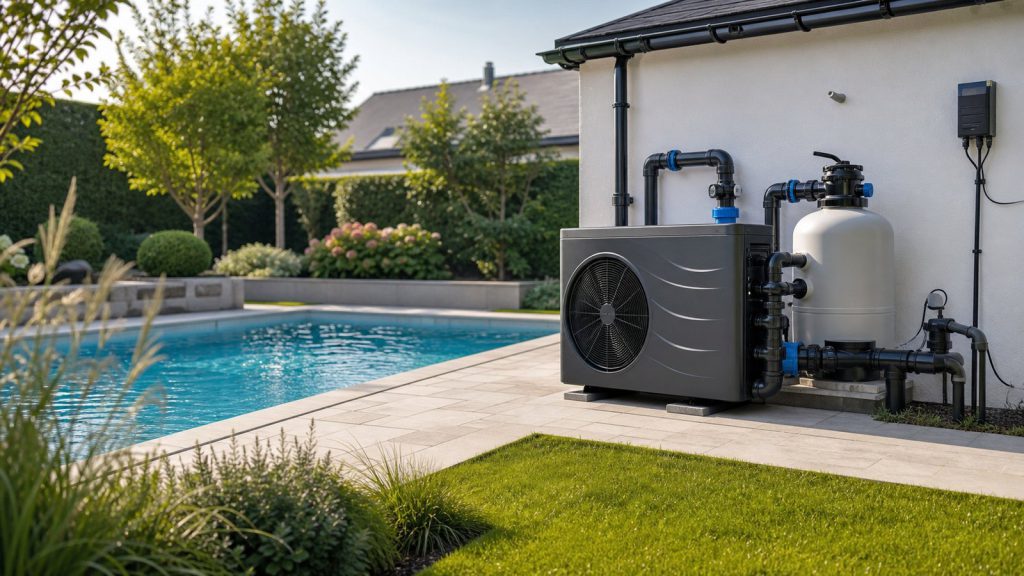
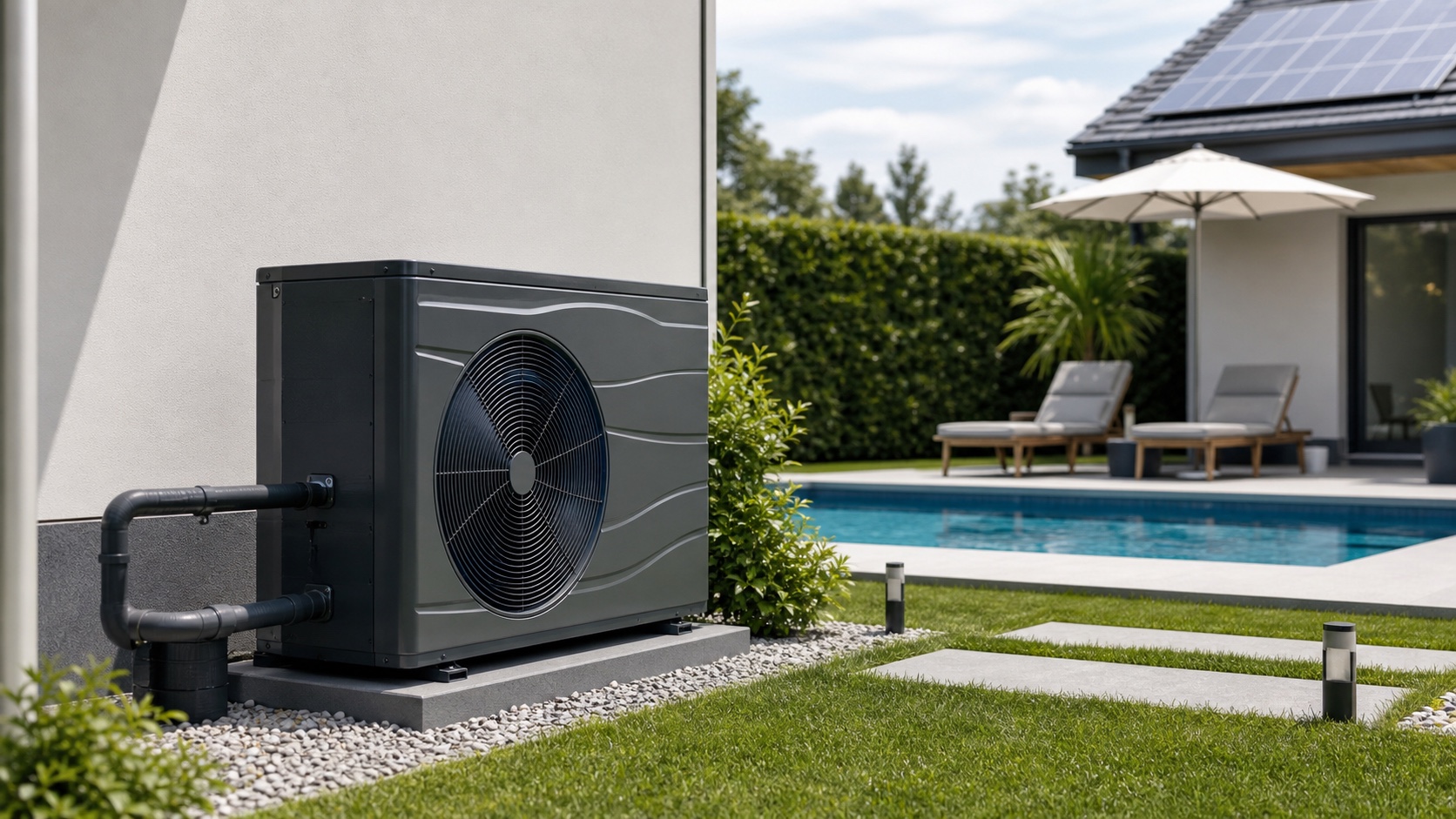
| Placement and airflow | leave open space for air intake and exhaust; don’t enclose the unit in a small shaft or corner without ventilation | a heat pump draws energy from the air; poor airflow reduces output and increases noise |
| Outdoor temperature and defrosting | check the unit’s operating range, the defrost cycle, frost on the evaporator and any error codes | output is lower in cold, damp conditions, and defrosting is a normal protective function, not always a fault |
| Electrics and condensate | check the breaker, power supply, residual current device, a firm base and the condensate drain | a puddle by the unit can be normal condensate, but electrical faults and poor protection are a job for a professional |
| When to call for service | call for service for repeated faults, freezing outside normal defrost cycles, noise, odour, breaker trips, or zero heating | the refrigerant circuit, electrics and internal work on the unit are not a job for the owner |
Why heating takes longer than you expect
- The pool has a large water volume and the required temperature rise is high.
- The pool isn’t covered and loses heat overnight or in the wind.
- The filtration runs for a short time, or flow through the pump is low.
- The unit is sited somewhere with poor airflow.
- The outdoor temperature is low and the unit spends part of its time defrosting.
Where to go next
- Water heating calculator
- Operating cost calculator
- Pool covers and hot tub thermal covers
- Filtration calculator
- Pool heat pump not heating
- When to call for service
Sources and context
For choosing and running a heat pump, this draws on Energy.gov. For installation clearances, flow, electrical wiring, defrosting and service work, always follow the specific manufacturer’s manual.