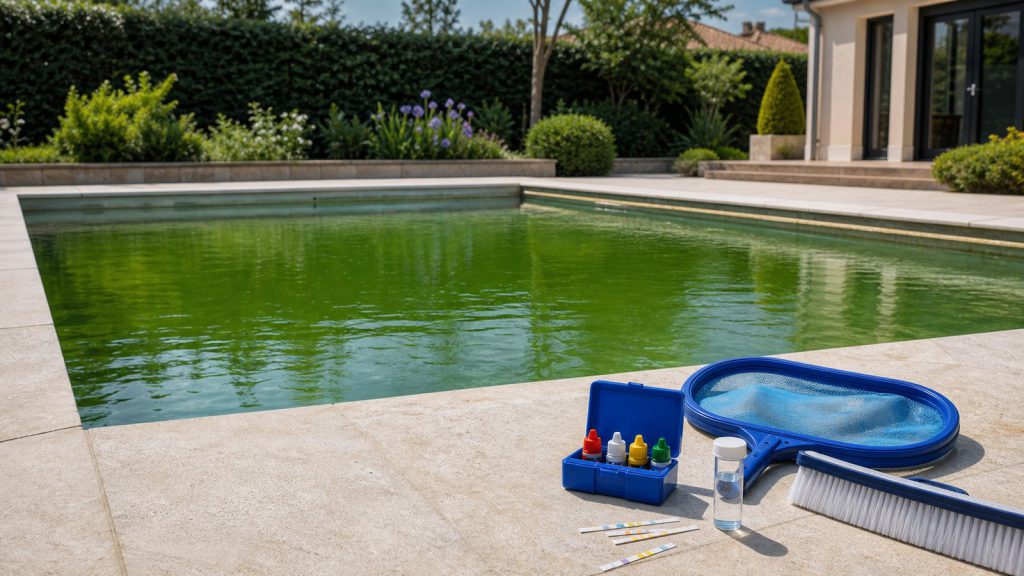
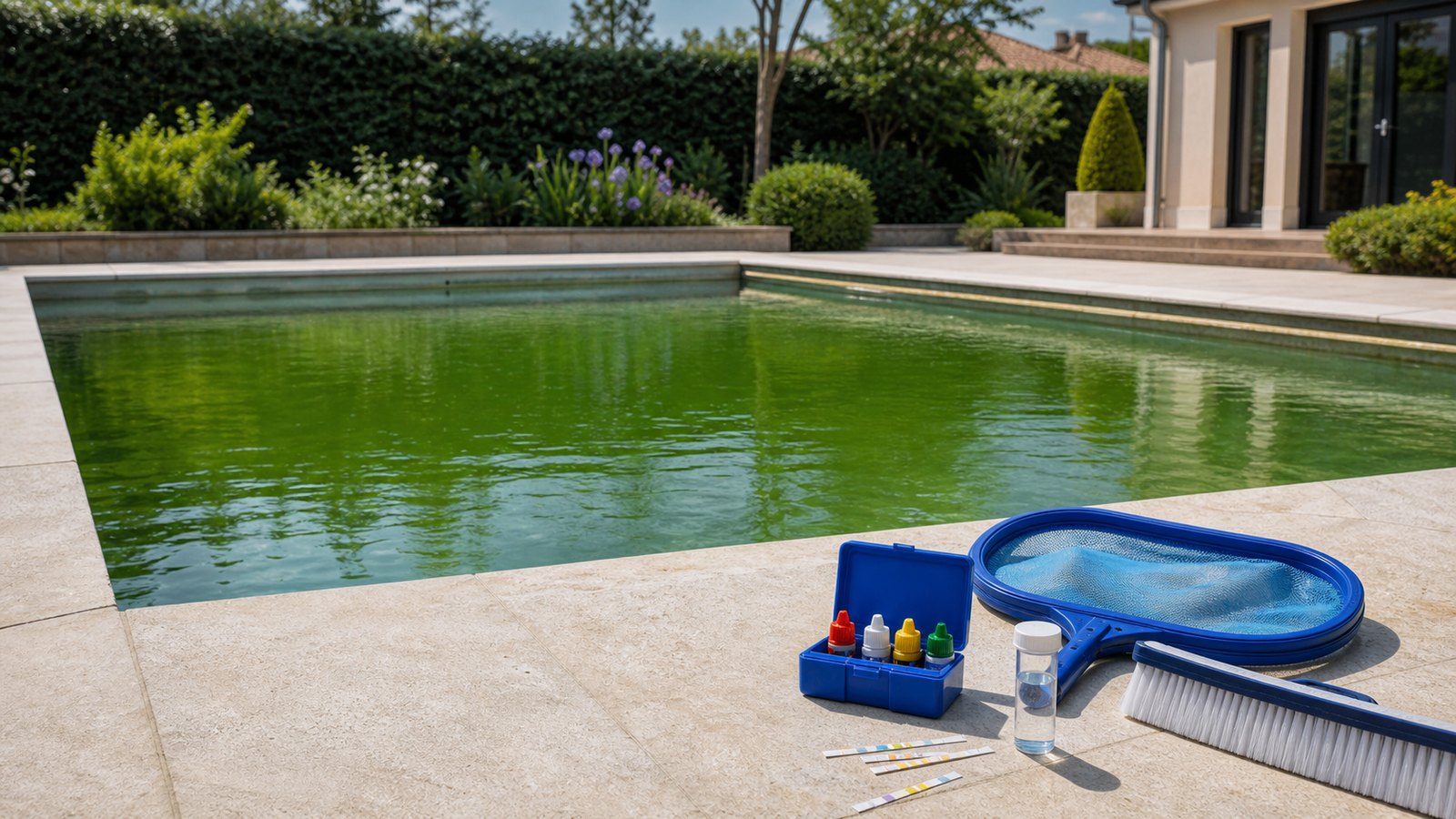
Quick answer: if you’re not sure about the water values, don’t jump straight to dosing. First check the age of the test, whether the sample was taken correctly, the reading time, and the difference between a strip, a drop test and a photometer.
Poor testing is one of the most common reasons for needless chemical dosing. The water can then stay out of range even as the owner keeps adding more product. The goal is a repeatable result, not the fastest colour on a strip.
Which method to use
| Method | When it suits | What to watch out for | What to do next |
|---|---|---|---|
| Test strips | a quick rough check at home, when you need to know if the water is outside the usual range | moisture in the tube, old strips, reading the time wrong, or comparing colours in shade or under artificial light | if the result is unclear, confirm it with a drop test or a photometer |
| Liquid drop test | a more accurate everyday measurement of pH, chlorine, total alkalinity and other values during maintenance | the wrong sample volume, old reagents, mixed-up drops, a dirty vial, or not following the procedure | measure the correct volume, clean the vial, and log the date you opened the reagents |
| Photometer | a more precise measurement for recurring problems, service work, a more public facility, or more expensive equipment | fingerprints on the vial, bubbles, incorrect zeroing, old tablets, or a sample taken from the wrong spot | clean the vial before testing, zero it according to the instructions, and test a fresh sample |
| Electronic probe | automatic dosing, ongoing monitoring of pH or ORP, and equipment with a control unit | an uncalibrated probe, it drying out, fouling, old calibration solution, or a difference from an independent test | calibrate regularly, store it correctly, and check it against a manual test |
| Testing at a shop or by a service technician | a check test, when the water repeatedly won’t balance out or home tests show nonsense readings | an old sample, a sample taken from the surface, a poorly sealed container, or a long trip in the heat | take a fresh sample from below the surface, get it there quickly, and bring information on the water volume and the chemicals used |
Rules for a reliable test
- Don’t take the sample right at the surface or near a jet; it’s better to sample at about elbow depth, away from the direct flow.
- Test before dosing, not shortly after adding chemicals.
- With a hot tub, test more often, because warm water and a small volume change quickly.
- If the results differ, repeat the test with the same method and check the age of the test.
- When dosing, work from the product label, the water volume, and the current reading.
When not to trust the result
- When the strip changed colour later than the instructions say it should.
- When the tests have been open a long time, are damp, or are past their expiry date.
- When you tested right after dosing, or right after several people had been swimming.
- When the electronic probe hadn’t been calibrated.
- When two methods show significantly different readings and the water problem isn’t improving.